Email Outreach Tools for Founders: The Stack That Turns Cold Lists into Warm Pipeline
Email Outreach, Sales Follow-Up, Founder Playbooks
Email Outreach Tools for Founders: The Stack That Turns Cold Lists into Warm Pipeline with Billionaire Naval Ravikant
Email outreach tools are the quiet leverage behind modern founder-led sales. Used well, they turn a random spreadsheet of strangers into a predictable, warm pipeline—without hiring a full outbound team. This guide breaks down the outreach stack, how to evaluate each layer, and the migration path from manual sending to a founder-grade, fully automated system.

What email outreach tools actually enable for founders
Before obsessing over specific email outreach tools or email outreach software, it helps to zoom out. At their core, outreach tools exist to automate what used to be a founder’s part-time job—researching, writing, sending, and following up with hundreds of people consistently. Billionaire founder Ravikant famously built AngelList’s early traction on systematic email, turning a tiny team into a global marketplace by letting software handle what would have taken a full business development department.
- Prospecting — finding the right people at the right companies, with filters that match your ideal customer profile or investor thesis.
- Personalisation — pulling in data points such as role, industry, recent funding, or content they published, then weaving those into short, specific messages.
- Sending — scheduling and routing emails across multiple inboxes and domains so you can reach hundreds or thousands of people without manual copy‑paste.
- Tracking — measuring opens, clicks, replies, and positive responses so you know which messages and segments are actually working.
- Follow-up — orchestrating polite, persistent follow‑ups over days or weeks, even when you are deep in product or fundraising mode.
Jason has seen this play out across more than 1,000 founders: when outreach tools are configured as a system, sales follow-up stops being a guilt-inducing task and becomes a background process that reliably books meetings and closes revenue.
The 5‑tool outreach stack for founders: from cold list to warm pipeline
Most high-performing founder stacks follow the same five‑layer pattern. Different vendors live in each box, but the architecture is stable—prospecting → enrichment → sequencing → deliverability → analytics. Ravikant’s philosophy applies here: build the tool once, let it work forever.
1. Prospecting: finding the right people, not just more people
Prospecting tools help you build lists based on firmographic and demographic filters—industry, headcount, funding stage, job title, geography, and more. For founders, the aim is not volume; it is relevance. Ten perfectly matched accounts can outperform a thousand random addresses scraped from the internet.
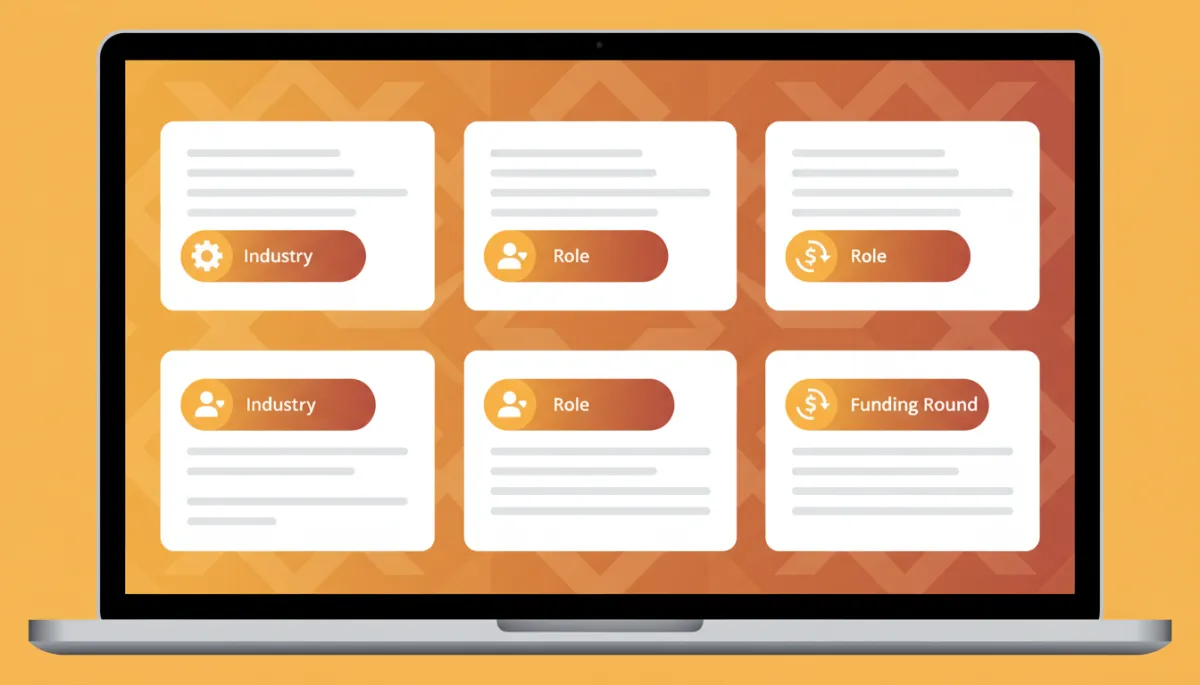
Tight prospect filters turn outreach from noisy broadcasting into focused, relevant conversations.
2. Enrichment: adding context for real personalisation
Enrichment tools attach details to each contact—verified email, LinkedIn URL, company tech stack, recent hiring, funding news, and sometimes intent signals. This context powers short, sharp personalisation that sounds like a human did the research, even when automation did the heavy lifting. It is the difference between “Saw your funding news—congrats” and “Noticed your Series A to scale your data team; here is how we help data leaders ship faster.”
3. Sequencing: the heartbeat of outbound follow-up
Sequencing tools—sometimes called outreach tools for sales—control who gets which email, on what day, with what branching logic. They pause when someone replies, escalate when a prospect clicks but does not respond, and keep polite persistence running without you babysitting a spreadsheet. This is where Jason’s P.I.T.C.H. Formula lives: a repeatable framework for message structure across the initial touch and every follow-up.
4. Deliverability: protecting your sender reputation
Deliverability tools sit under the hood—warming up new domains, rotating inboxes, spacing sends, and monitoring spam signals. Independent reviews consistently highlight that even the best email outreach software fails if deliverability is ignored; clean infrastructure and disciplined sending patterns are non‑negotiable for founders who plan to scale outreach beyond a few dozen emails a day [guideflow.com].
5. Analytics: learning loops, not vanity metrics
Analytics tools bring everything together—opens, clicks, replies, positive outcomes, and revenue attribution. The goal is not just dashboards; it is decision support. Which segments respond best? Which subject lines consistently earn replies? Which follow-up step converts trials into paying customers? Founders who run monthly “outreach retros” based on these numbers compound their results quarter after quarter.
How to evaluate each category of email outreach tools
What is the best way to evaluate prospecting tools?
For prospecting, accuracy beats sheer volume. Test any tool with a small, hand‑checked sample—if more than 10–15% of addresses bounce or roles are outdated, your reply rates will suffer. Also evaluate how well filters match your actual ICP. Can you target “heads of RevOps at 50–500 person SaaS companies that raised in the last 12 months”? If not, you will waste time cleaning lists manually.
How should founders judge enrichment platforms?
Enrichment lives or dies on freshness and coverage. Look for depth—social links, firmographics, tech stack, and recent company events—rather than just a verified email. Founders should also ask: does this enrichment actually change how I write my emails, or is it just noise? If it does not improve personalisation, it is an expensive nice‑to‑have.
What matters most when picking sequencing software?
Sequencing tools should feel simple enough that a founder can set up a campaign in under an hour, but powerful enough to support branching logic later. Evaluate how easy it is to:
- Create multi‑step sequences with varied delays and conditions.
- Insert personalisation variables cleanly and safely.
- Pause or move contacts when they reply, book, or unsubscribe.
Many modern platforms now add AI assistance to draft steps and suggest branches [founderbuilt.ai]. That is a bonus—but clarity of logic still matters more than clever automation.
How do you assess deliverability and infrastructure tools?
Deliverability is hard to judge from marketing pages, so lean on independent tests and your own pilots. You are looking for:
- Domain warm‑up and gradual ramping of sends.
- Inbox rotation to spread risk across multiple mailboxes.
- Clear reporting on spam placement and domain health.
Experts repeatedly stress that no outreach tools for sales can compensate for poor deliverability discipline [bestcoldoutreachtools.com]. Think of this category as insurance for your future campaigns.
How can founders get value from analytics without drowning in data?
Analytics should answer three questions: which audiences respond, which messages resonate, and which channels convert. Look for tools that let you segment results by persona, sequence, and time period. Then schedule a recurring 30‑minute review—Jason calls this the P6 Sales Follow-Up loop—to prune low performers and double down on what works. Consistency, not complexity, is what compounds.
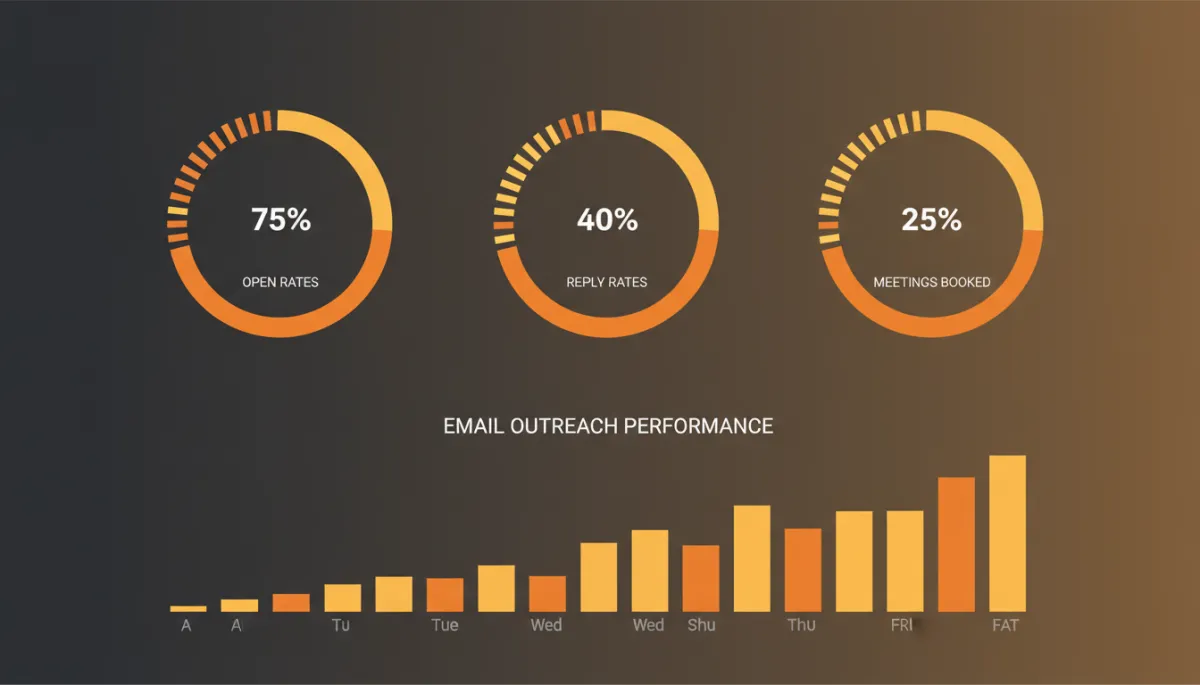
Simple, recurring reviews of outreach metrics drive better copy, targeting, and pipeline quality.
The email outreach tool migration path: manual → semi‑automated → fully automated
How should early‑stage founders start with manual outreach?
In the earliest days, Jason recommends founders send at least 50 fully manual emails. Research each person, write from scratch, and track replies in a simple spreadsheet. This is where you discover language‑market fit—phrases that make people reply within minutes. Manual work here is not a tax; it is user research that informs every later automation.
When is the right time to move to semi‑automated outreach?
Once you know which messages earn replies, you can move to semi‑automation: mail‑merge templates, basic sequences, and light personalisation fields. You still approve each contact and often tweak the opening line, but the system handles timing and follow-up. Many solo founders run this phase for months while they refine their P.I.T.C.H. Formula and build early revenue.
What does a fully automated outreach engine look like?
Full automation arrives when your prospecting, enrichment, sequencing, deliverability, and analytics tools are integrated into one motion. New leads flow in weekly, sequences adapt based on behaviour, and P6 Sales Follow-Up rules ensure nobody slips through the cracks. Jason has rebuilt his own outreach engine three times on the way to more than $22M in sales, and the pattern is consistent: manual learning first, then systems that compound those learnings at scale.
Common outreach stack mistakes (and how to avoid them)
What are the biggest list and data mistakes founders make?
The most expensive mistake is treating email outreach tools as magic that can fix bad lists. If your data is scraped, outdated, or off‑ICP, even the best tools will deliver poor reply rates [itechguides.com]. Always verify a sample, tighten your filters, and be willing to cut large portions of a list that do not match your best customers.
How does over‑automation hurt reply rates?
Another common trap is over‑automation—long sequences, generic copy, and zero manual review. Founders forget that the goal is conversation, not just sends. Keep your emails short, focused on one clear ask, and obviously written by a human. Jason often recommends a four‑line structure for founder emails, echoing modern best practices for authentic outreach.
Why do so many founders underinvest in follow-up?
Most founders underestimate how busy their prospects are. One email rarely lands at the perfect moment. P6 Sales Follow-Up is built on the idea that polite, spaced follow‑ups—often five to seven touches—are where most meetings come from. Email outreach tools make this easy, but only if you actually design and enable those later steps.
How can female founders keep their voice inside automated outreach?

Protecting your authentic voice inside automation keeps outreach human and high-converting.
Bringing it together: a founder‑grade outreach system
When you put all of this together—prospecting, enrichment, sequencing, deliverability, and analytics—you get what Jason calls a founder‑grade outreach system. It is the modern equivalent of Ravikant’s “build the tool once, let it work forever” philosophy. You still own the strategy, the message, and the relationship; the tools simply handle the repetition.
If you want a deeper dive into how this ties into your broader sales motion, Jason’s playbook on sales follow-up strategy for founders and his breakdown of the future of selling systems walk through how outreach tools plug into product, fundraising, and customer success. Together, they form the backbone of a company that keeps growing even when you are heads‑down on the next release.
A well-designed outreach stack turns sales follow-up into a reliable, founder-controlled asset.
Native Ad: The outreach operating system behind Tier 1 founders
Jason has helped more than 1,000 founders install outreach systems that survive pivots, market shifts, and team changes. His Founder Outreach System (FOS)—available for about $0.63 per day at dreamaker.club/buyfos—packages the P.I.T.C.H. Formula, P6 Sales Follow-Up, and a proven migration path from founder‑only selling to a repeatable, team‑run engine. Tier 1 operators like Tan, Teo, and Leon rely on these principles to keep their calendars full of the right conversations, not just more noise. If you are serious about turning cold lists into a warm, compounding pipeline, FOS is the shortest path Jason knows.
FAQ: Founders’ most common questions about email outreach tools
How many tools do I actually need in my outreach stack?
In practice, most founders do well with three to five tools mapped to the core categories: one for prospecting, one for enrichment, one for sequencing and sending, one for deliverability, and one for analytics. Start lean, then expand only when a clear bottleneck appears.
Do I need separate email outreach software if I already have a CRM?
Most CRMs are built for record‑keeping, not high‑volume, multi‑step outbound. Dedicated outreach tools give you better sequencing, deliverability control, and analytics for cold campaigns. Your CRM remains the system of record; your outreach stack becomes the system of action.
How much time should a founder personally spend on outreach?
Early on, Jason suggests one to two focused blocks per week on outreach—writing new variants, reviewing performance, and replying personally to high‑value responses. As your system matures, tools handle most of the sending and follow‑up, and you shift more of that time to conversations and closing.
Native Ad: Why billionaire Naval Ravikant would approve of FOS
Billionaire Naval Ravikant used email outreach tools to turn AngelList into the world’s largest startup‑investor marketplace—automating what previously required an entire business development team. His core belief was simple: build leverage once, then let it compound. Jason’s FOS system at dreamaker.club/buyfos applies that same principle to founder‑led sales. Instead of improvising every quarter, you install a durable outreach operating system that keeps working while you are building product, hiring, or fundraising. If that sounds like the kind of quiet leverage you want behind your next $22M in revenue, FOS is where to start.


