Event Follow Up Email for Founders: The 3-Day Window That Turns Connections into Clients
Sales Follow-Up, Founder Playbooks, Event Networking
Event Follow Up Email for Founders: The 3-Day Window That Turns Connections into Clients (Inspired by Billionaire Robert Herjavec)
Founders don’t lose deals because they can’t pitch — they lose them because they don’t follow up. Herjavec built a $200M cybersecurity empire by treating every event like a pipeline opportunity and every post-event email like money in motion. His rule is simple: you have 72 hours after any event to follow up, or the connection dies. This article shows you how to own that 3-day window with a clear system, practical templates, and founder-tested follow-up strategies you can start using today.
The 72-Hour Event Follow-Up Window (Why It Matters More Than the Event Itself)
Herjavec’s 72-hour rule works because memory and momentum decay fast. By Day 4, most people barely remember who they met — and they’ve already been hit with dozens of other emails, Slacks, and LinkedIn requests. The event felt big to you, but to your prospects it was just one more thing in a crowded week.
Jason has seen this pattern across $22M+ in sales, 1,000+ founders coached, and three complete rebuilds of his own career. The founders who win from events are not the best talkers in the room — they’re the ones who respect the 72-hour window and treat every event follow up email like a micro-sales conversation with a clear next step. That’s exactly what his P6 Sales Follow-Up framework at AuthorJason.com is built to support.
Same-Day vs Day 1 vs Day 3: Timing Your Follow Up Email After an Event
Inside the 72-hour window, timing is a strategy — not a guess. Think about your networking follow up email in three passes, each with a different job to do.
Same-Day: The “Anchor” Touch (30–60 Seconds Each)
Same-day follow up isn’t about selling — it’s about anchoring the memory while the conversation is still fresh. A quick, simple event follow up email or LinkedIn message signals professionalism and primes the relationship for a more intentional ask later. Think of it as planting a flag: “We met, this mattered, I remember you.”
Day 1: The “Context + Next Step” Email (Your Real First Shot)
Day 1 is where most of the upside lives. Here, your follow up email after the event should reference the specific conversation, restate the problem you discussed, and propose a simple, binary next step — usually a short call or a quick review of something you’ll send. This is where Jason’s P.I.T.C.H. formula starts to come into play: Personal, Insight, Tie-in, Call-to-action, Helpful close.
Day 3: The “Light Nudge” and Close of the Window
By Day 3, you’re not introducing yourself — you’re making it easy for them to respond. This is a short, respectful nudge that reaffirms the value of connecting and gives them one clear way to say “yes” without friction. After Day 3, Jason recommends moving that contact into a longer-term nurture sequence rather than continuing to chase as if the event just happened.
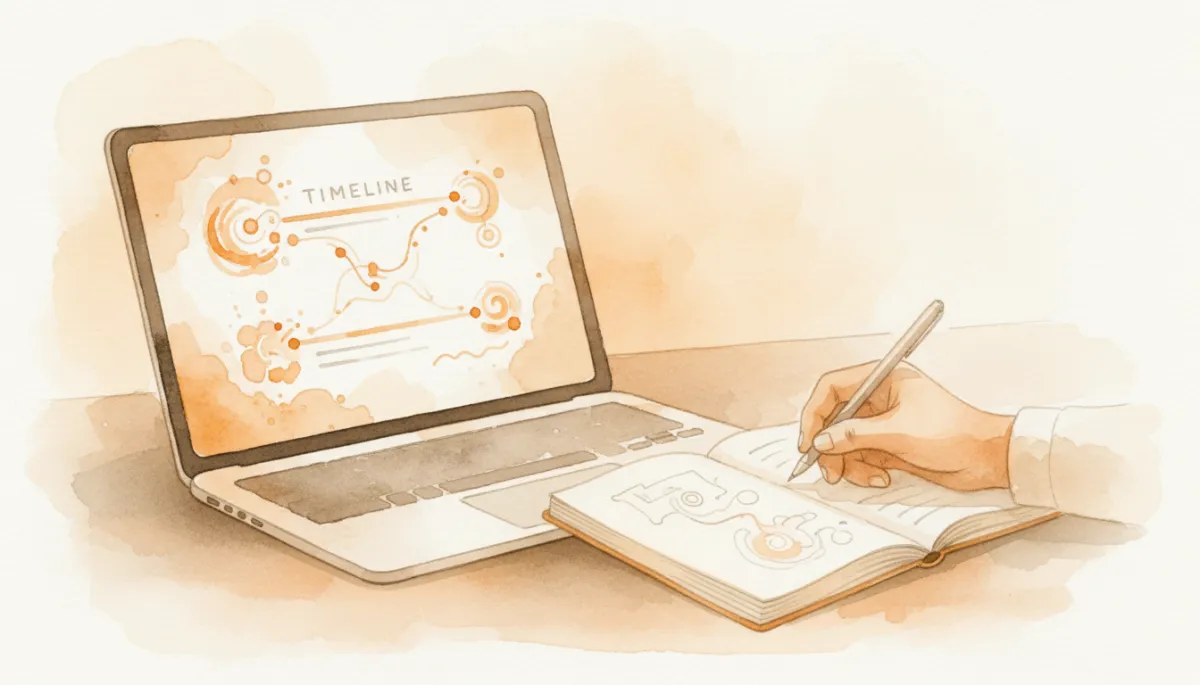
Treat the 72-hour window as a structured campaign, not a random burst of emails.
What Every Effective Event Follow Up Email Must Include
Whether you met at a 5,000-person conference or a 40-person founder dinner, the core ingredients of a powerful networking follow up email stay the same. Jason teaches founders to focus on three essentials that map directly to the P.I.T.C.H. formula.
- Personal reference: One specific detail that proves you remember them — the panel you both attended, the joke you shared, or the metric they mentioned. This collapses the distance between “stranger” and “someone who gets me.”
- Shared moment: Name the moment where your interests overlapped — a pain point, a goal, or a surprising insight. This is where trust and relevance live.
- Specific next step: One clear, low-friction action. “Would you be open to a 15-minute call next week?” beats “Let’s keep in touch” every time.
Conference vs Webinar vs Podcast: Tailoring Your Follow Up Strategy
Not all events are equal. A hallway conversation at SaaStr is different from a Q&A on a Zoom webinar or a guest spot on a podcast. Jason coaches founders to adjust their event follow up email based on how the relationship started and what context already exists.
Conference Follow Up: From Badge Scan to Business Case
Conferences are noisy — people meet dozens of founders in a day. Your job is to cut through the blur. Reference the booth, the hallway, or the session where you met, and quickly connect your offer to the problem they mentioned. This is where Jason’s P6 Sales Follow-Up shines: Position, Problem, Proof, Path, Priority, and Promise, all in a few tight sentences.
Webinar Follow Up: From Chat Message to Deeper Discovery
Webinar attendees already raised their hand for your topic. Your follow up email after the event should acknowledge their engagement — a question they asked, a poll they answered, or the fact that they stayed until the end. Then, invite them to go deeper on the exact outcome the webinar promised.
Podcast Follow Up: From Shared Audience to Strategic Partnership
Podcast connections tend to be higher-leverage — hosts, producers, and guests are all potential partners, not just prospects. Here, your networking follow up email should focus less on selling and more on collaboration: cross-promotions, co-hosted sessions, or intros to other aligned founders.
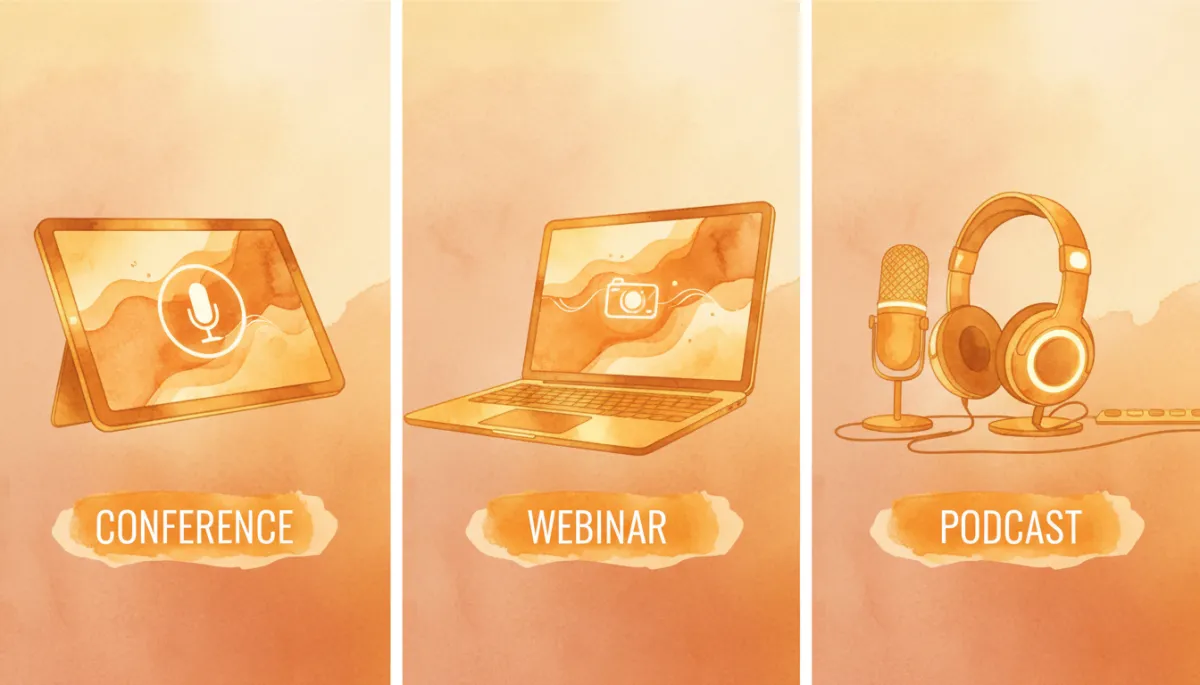
Match your follow-up tone and ask to the type of event and relationship.
Practical Templates: Event Follow Up Emails You Can Steal and Ship Today
Conference Follow Up Email Template
Subject: Great meeting you at [Conference] — quick idea

Hi [Name],

Really enjoyed our chat near the [location/session] about [specific topic or problem].
You mentioned [their challenge or goal] and it stuck with me.

We help founders like you [specific outcome] without [painful trade-off].
Thought it might be useful to share a couple of examples and see if there’s a fit.

Would you be open to a 15-minute call next week?
I can share what’s working for teams at your stage and you can decide if it’s worth exploring.

Best,
[Your Name]
Webinar Follow Up Email Template
Subject: Thanks for joining the webinar — one next step

Hi [Name],

Thanks for joining the webinar on [topic] and for [their action — asking a question, staying to the end, answering a poll].

Based on what you shared about [their situation], I think there’s a simple way to [specific improvement tied to webinar promise].

If you’d like, I can walk you through how founders are applying this in 15 minutes
and help you map it to your current pipeline.

Want to grab a quick call next week?

Best,
[Your Name]
Podcast Follow Up Email Template
Subject: Let’s build on the podcast conversation

Hi [Name],

Really enjoyed our podcast conversation about [topic] — especially your point on [specific insight].

Our audience is full of founders wrestling with [related challenge].
I think there’s a smart way to collaborate so both of our audiences win.

Would you be open to exploring:
- a short follow-up session focused on [specific angle], or
- a joint resource for founders on [clear outcome]?

Happy to brainstorm a simple, low-lift idea that serves your listeners first.

Best,
[Your Name]

Use follow-up to reinforce your expertise and outcomes, not just your introduction.
How to Stay Memorable After a Large Event (Without Spamming Anyone)
Large events are designed to make you forget — loud rooms, back-to-back sessions, and endless badge scans. Staying memorable is less about charisma and more about systems. Jason’s Tier 1 FINAL approach (Tan, Teo, Leon — three founders who executed this flawlessly) shows how simple habits can turn chaotic conferences into predictable pipeline.
- Tag contacts in real time: Add quick notes on your phone — “CFO, Series B, churn problem” — so your follow up email feels tailored, not generic.
- Send one helpful resource: A relevant article, a short loom, or a framework (like Jason’s future-of-selling system at AuthorJason.com) keeps you anchored as the person who adds value, not noise.
- Create a light nurture path: For people who don’t respond inside 72 hours, move them into a monthly or bi-weekly touch pattern — a short insight, a relevant case study, or an invite to your next webinar.
People Also Ask: Founders’ Biggest Event Follow-Up Questions
How soon should I send a follow up email after an event?
Aim for a same-day anchor message and a more complete follow up on Day 1. This keeps you inside the 72-hour window Herjavec swears by, while giving you time to craft thoughtful, specific outreach.
What should I say in a networking follow up email if I didn’t pitch at the event?
You don’t need a hard pitch. Reference the conversation, highlight a problem they mentioned, and offer one next step to explore whether you can help. Curiosity and clarity outperform pressure every time.
Is it okay to follow up more than once after an event?
Yes — as long as each touch adds value and reduces friction. Jason suggests a Day 1 email, a Day 3 nudge, then moving into a lighter nurture rhythm if there’s no response. Respectful persistence beats one-and-done outreach.
How long should an event follow up email be?
Short enough to read on a phone in under 30 seconds. Aim for 5–8 tight sentences, one clear ask, and no attachments unless they explicitly asked for something.
What if I missed the 72-hour window entirely?
Own it and reset the frame. A simple “I dropped the ball on following up after [event], but our conversation about [topic] is still on my mind” works better than pretending the delay didn’t happen.
How do I scale event follow up without sounding robotic?
Use a consistent structure — like Jason’s P.I.T.C.H. formula — but personalize the first two lines and the specific next step. Templates give you speed; details create trust.
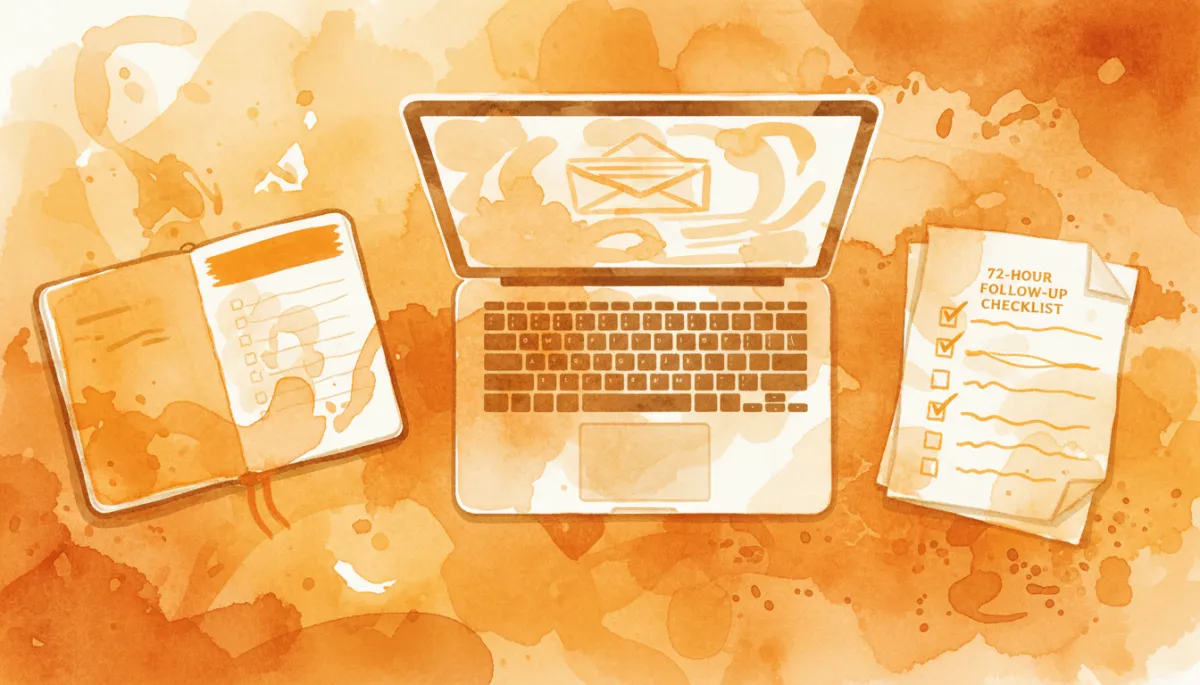
A simple checklist turns event chaos into a repeatable, founder-friendly follow-up system.
Turn Events into Revenue: Your Next 72 Hours Start Now
Events are expensive — flights, tickets, time away from product and team. The only way they pay off is if you treat the 72 hours after each event as seriously as the event itself. That’s how Herjavec turned casual conversations into a $200M+ cybersecurity empire, and it’s how Jason’s founders are quietly building predictable, founder-led pipelines without becoming “salesy.”
If you want a lightweight system that keeps you following up like this every week — not just when you feel motivated — Jason built FOS (Founders Operating System) to run exactly these kinds of sales rhythms for as little as $0.63/day. You can get it at dreamaker.club/buyfos and plug in the P6 Sales Follow-Up and P.I.T.C.H. templates you just saw. For more on how the future of selling is shifting toward founder-led, system-supported conversations, explore his breakdown at AuthorJason.com, and pair it with trusted perspectives from leaders like Sales Hacker and Harvard Business Review. The events you’ve already attended still hold untapped revenue — your next event follow up email might be the one that unlocks it, just like it did for billionaire Robert Herjavec.


