Sales Email Template for New Clients: 5 First-Message Formats Founders Use to Win Business
Sales Strategy, Founder-Led Selling, Email Templates
Sales Email Template for New Clients: 5 First-Message Formats Founders Use to Win Business (Inspired by Billionaire David Neeleman)
The first email a new client receives from you does more than confirm a purchase — it sets the tone for the entire relationship. Neeleman launched JetBlue with a customer-first philosophy, where every new customer welcome email felt handwritten, personal, and warm. Founders today can borrow that same philosophy and still scale, if they use the right structure, language, and follow-up system behind every sales email template for new clients.

Jason — founder of AuthorJason.com, creator of the P6 Sales Follow-Up system, and advisor to more than 1,000 founders who have generated over $22M+ in tracked revenue — has rebuilt his sales approach three times. What he learned is simple: your first client email template should feel like it was typed just for one person, even if you send it to hundreds every month. That is the heart of the P.I.T.C.H. Formula and the five templates in this guide.
The P.I.T.C.H. Formula: How Founders Make New-Client Emails Feel Human
Founders often ask Jason for one perfect email template new clients will always respond to. It does not exist — but a reliable formula does. Jason’s P.I.T.C.H. Formula gives you a simple checklist to run every sales email template for new clients through before you hit send:
- P – Personal context: Show you know who they are, what they bought, or what they are dealing with now.
- I – Intent made clear: State why you are emailing in one clean, honest sentence.
- T – Tangible next step: Offer one low-friction call to action — reply, click, or book.
- C – Conversational tone: Write like a professional human, not a brochure or a bot.
- H – Helpful finish: Close with something useful — a resource, reassurance, or quick option list.
A simple checklist like P.I.T.C.H. keeps every first email focused, clear, and human.
Template 1: Warm Welcome Email After Purchase
This is your JetBlue moment. Like Neeleman’s early welcome messages, your warm welcome should confirm the purchase, reduce anxiety, and invite conversation — not just send a receipt. Use this first client email template within minutes of a new customer buying from you.
Subject: Welcome, [First Name] — here is what happens next with [Product/Service]
Hi [First Name],

Thank you for choosing [Company/Offer] — I'm glad you're here.

You just [brief description of what they bought or did], and over the next few days you can expect:
1) [Step 1 in plain language]
2) [Step 2]
3) [Step 3 or outcome]

If anything feels unclear, just hit reply to this email — my team and I read every message.

[Optional: 1 helpful link, guide, or short video]

Talk soon,
[Your Name]
Founder, [Company]
CTA: “If anything feels unclear, just hit reply to this email” — a direct, low-pressure invitation to respond, which increases early engagement and reduces refund risk.
Template 2: New Client Onboarding Email
After the warm welcome, your next sales email template for new clients should give structure. Onboarding emails turn a “yes” into momentum — outlining steps, people, and timelines so your client feels guided, not left alone in a portal.
Subject: Your first 7 days with [Company] — simple onboarding plan
Hi [First Name],

Now that you're in, I want your first week with [Company] to feel simple.

Here's your onboarding plan for the next 7 days:

Day 1–2: [Quick win or first task]
Day 3–4: [Secondary setup or milestone]
Day 5–7: [First meaningful result they can expect]

Your main contact: [Name, role, email]
Where to get help: [Support link or office hours]

To get started, take this one step today:
[Single action with link]

You don't need to do everything at once — just this first step.

With you,
[Your Name]
CTA: One focused action — usually a link to book a kickoff call, complete a quick form, or watch a short setup video.
Template 3: First-Time Cold Prospect Intro Email
Cold outreach is where many founders freeze. Jason’s work with Tier 1 founders — including Tan, Teo, and Leon — shows that a strong first client email template to cold prospects is short, specific, and respectful of time. It reads like a thoughtful note, not a mass blast.
Subject: Quick idea for [Company] on [specific outcome or metric]
Hi [First Name],

I noticed [specific observation about their company, role, or recent move].

I help [type of companies] do [specific outcome] without [common headache].
Recent example: [1-sentence result you created].

If you're open to it, I can send a short loom or 2–3 bullet ideas tailored to [Company].

Worth sending?

[Your Name]
[One-line credibility, not a full bio]
CTA: “Worth sending?” — a micro-commitment that feels lighter than asking for a meeting on the first touch, while still moving the conversation forward.

Short, specific intro emails often outperform long pitches with busy decision-makers.
Template 4: Re-Introduction Email After a Referral
Referrals are warm, but they still need structure. A strong sales email template new clients receive through a referral should honor the person who introduced you, clarify why you are reaching out, and make the next step obvious and easy to accept or decline.
Subject: [Referrer Name] suggested we connect about [topic]
Hi [First Name],

[Referrer Name] mentioned you're working on [brief description] and thought it could be useful for us to connect.

For context, I help [type of clients] with [specific problem or outcome].
[Referrer Name] felt this might be relevant because [1 line of context].

If it helps, I'm happy to send a short note with 2–3 ideas first,
or we can jump on a quick [15/20]-minute call.

Here's my calendar if that's easier:
[Calendar link]

Either way, I appreciate the intro and your time.

[Your Name]
CTA: Offer two paths — a quick ideas email or a short call — and let them choose. That sense of control reduces friction and respects their bandwidth.
Template 5: “We Noticed You” Trigger Email
Trigger-based emails are where personalization at scale really lives. When someone views your pricing page three times, downloads a guide, or reactivates an old account, a “we noticed you” email lets you respond in a way that feels human, not creepy — very much in line with Neeleman’s belief that customers should feel seen, not tracked.
Subject: Noticed your interest in [topic] — want a quick walkthrough?
Hi [First Name],

I saw you've been exploring [page, resource, or feature] a few times recently.

Founders usually look at that when they're thinking about [problem or decision].

If you'd like, I can:
A) Send a 3-minute loom walking through how this works, or
B) Answer 2–3 quick questions over email

Just reply with A or B (or "not now" if timing's off).

Either way, I appreciate you checking us out.

[Your Name]
CTA: Ask them to reply with a single letter — A, B, or “not now.” That micro-choice keeps the bar low while still generating clear signals for your sales follow-up system.
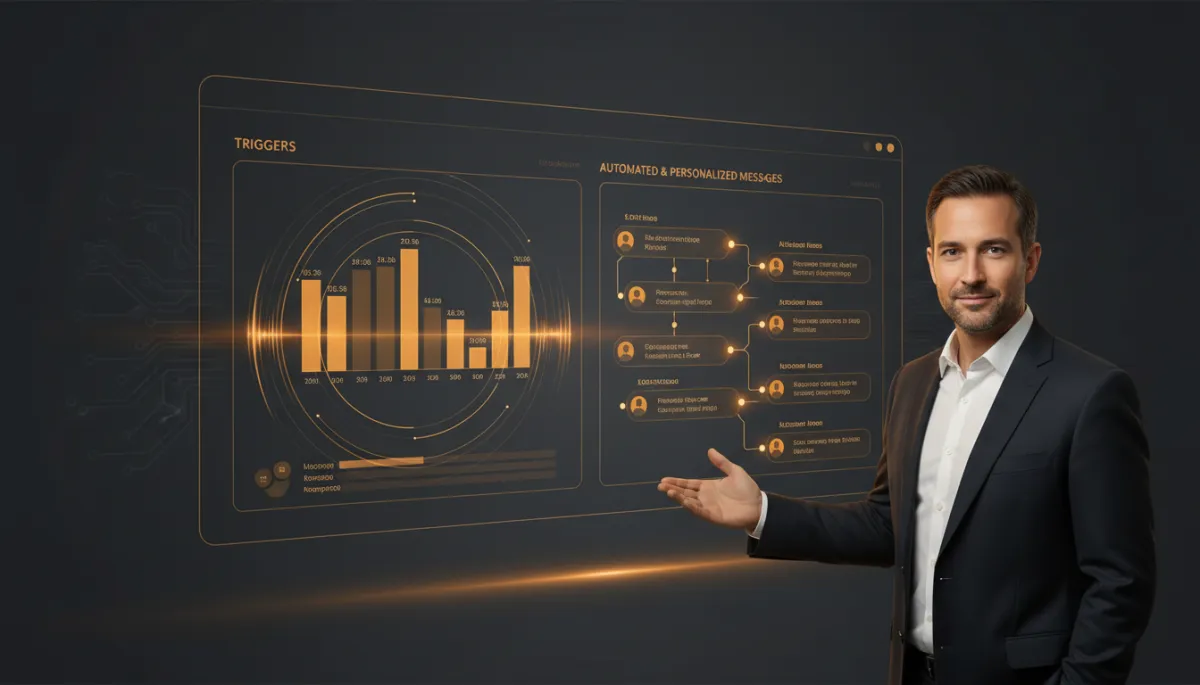
Behavior-based triggers let you reach out at the right moment without losing the human touch.
What Makes a New-Client Email Feel Personal Even at Scale?
Jason’s founders often use automation, but they do not outsource empathy. Across all five templates, a few elements consistently make each email template new clients receive feel genuinely personal:
- Specific details — referencing a recent action, role, or goal, not generic “we value your business” lines.
- Plain language — short sentences, concrete promises, and zero jargon-heavy paragraphs.
- One clear next step — not three competing CTAs that feel like work.
- Founder presence — signing as the founder, occasionally adding a one-line personal reason you built the product.
- Honest options — inviting “not now” as an acceptable reply, which builds trust over time.
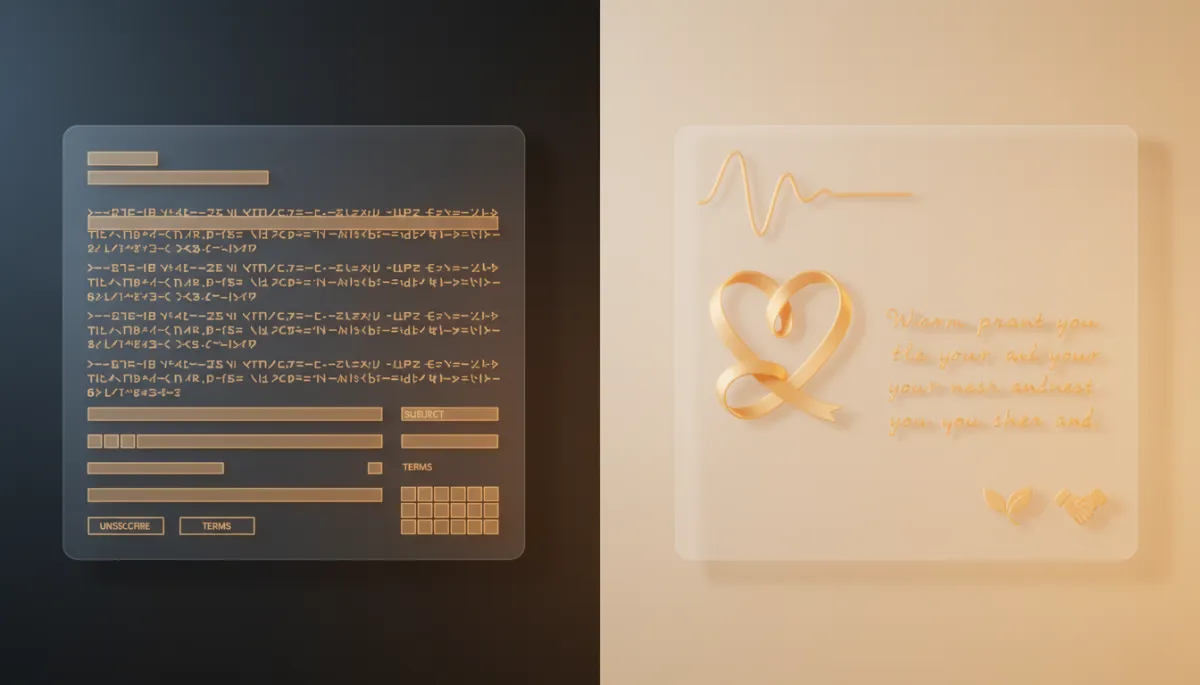
Small shifts in tone and specificity can double replies without adding complexity.
How often should founders follow up after the first email?
With Jason’s P6 Sales Follow-Up, founders typically plan six purposeful touches over 21–30 days — mixing email, short Looms, and sometimes LinkedIn. The first email opens the door; the next five build trust, clarity, and timing. For a deeper breakdown, see his Sales Follow-Up Strategy: Founder’s Playbook.
Should the founder always send the first client email personally?
Early on, yes — at least in name and tone. As you grow, your team or tools can send on your behalf, but the writing should still sound like you. Neeleman’s early emails read like a real person talking, not a committee. That is the standard to keep, even when systems handle the send.
How long should a sales email template for new clients be?
Aim for 75–200 words for first-touch emails. Welcomes and onboarding can be slightly longer if they are skimmable — use short paragraphs, numbered steps, and bold labels. If you need to teach something deeper, link to a resource instead of cramming everything into the email body.
What subject lines get the highest open rates with new clients?
Jason sees strong performance from clear, specific subjects: “Welcome, [Name] — here is what happens next,” “Quick idea for [metric],” or “Your first 7 days with [Company].” Avoid clickbait. The subject should simply preview the value inside, not oversell it.
How do I balance automation with genuine personalization?
Use automation for timing, triggers, and structure — not for generic filler text. Keep a few merge fields (name, company, last action), then add one manual line for high-value prospects. Over time, tools like HubSpot or Customer.io can help you send the right template at the right moment while preserving your founder voice.
Where does email fit into the future of founder-led selling?
Email remains the backbone of high-ticket, relationship-driven sales — especially when combined with video, chat, and live conversations. In Jason’s view, the future belongs to founders who build systems that compound every touch. He goes deeper into this in What Is the Future of Selling System?, where he maps how tools, templates, and human judgment work together.
Turn Templates into a Daily Revenue System
The five templates in this guide give you a starting point, but the real leverage comes when you connect them into a repeatable system. That is what Jason built with P6 Sales Follow-Up and the FOS program — a practical, founder-first operating system for daily selling at just $0.63/day via dreamaker.club/buyfos. It is designed for founders who want Neeleman-level customer care with modern, scalable tools.
Jason has guided more than 1,000 founders through rebuilding their sales process, often three times over, until it finally fits their market, energy, and goals. If you want your next sales email template new clients see to feel like a turning point — not a guess — consider learning the same frameworks he uses with Tier 1 founders like Tan, Teo, and Leon.
When you combine founder-led empathy, Neeleman-style customer-first thinking, and a proven follow-up system, every first email becomes more than a message — it becomes the opening move in a long, profitable relationship.


