
How Billionaire Steve Jobs Silenced “Nobody Needs This” — the Objection That Almost Killed the iPhone
Sales Objections, Startup Sales, Steve Jobs
How Billionaire Steve Jobs Silenced "Nobody Needs This" — the Objection That Almost Killed the iPhone
Your buyers keep saying, "Nobody needs this." Jason wrote this for the founder who leads every demo, carries the quota, and is tired of defending a future nobody else can see yet.

Why "Nobody Needs This" Is the Most Dangerous Objection — and the Easiest to Mishandle
PAA: What does "nobody needs this" really mean in sales?
It usually means, "I can’t picture this solving a burning problem for me yet," not that your market is truly zero. Most buyers speak from their current habits, not from the future you’re building toward.
PAA: How did Steve Jobs respond to "no market" objections?
Jobs didn’t argue spreadsheets. He used stories, demos, and design to make people feel a new future, then let their own excitement override the objection. He created demand instead of searching for it.
PAA: How can founders handle "no market" without sounding defensive?
Shift from defending your TAM slide to calmly showing a before/after story, one painful use case, and a simple demo. Invite the buyer to react instead of forcing them to agree with you.
PAA: How do you know if "nobody needs this" is real feedback or just fear of change?
Ask where they last felt real pain your product could touch. If they can’t name a concrete moment, you’re hearing habit and risk-aversion, not a true absence of demand.
PAA: What should a founder do right after hearing "nobody needs this"?
Pause, breathe, and get curious. Ask, "In your world, who would feel this most if it were real?" Then explore their answer instead of rushing into pitch mode.
PAA: How can technical founders test demand without over-explaining the product?
Lead with a tiny, concrete before/after: a saved hour, a prevented outage, a smoother handoff. If the right buyer leans in and asks, "How?", you’re seeing demand. If they shrug, you’re early.
"Nobody needs this" stings more than a simple "too expensive." As a founder, it feels like they’re rejecting your life’s work, not just your pricing. Jason sees this every week with teams of five, ten, twenty people, where the founder still runs every sales call.
The danger is not the objection itself. The danger is what it does to you. You rush into pitch mode. You throw more slides, more features, more logic. Or you shrink, nod, and tell yourself, "Maybe the market isn’t ready." Both reactions quietly kill momentum, one conversation at a time.
McKinsey notes that companies who reframe buyer conversations around value and outcomes, not just features, outperform peers on growth and profitability. (McKinsey) That reframe is exactly what this objection is inviting you to practice.
As Jason puts it at AuthorJason.com, this objection is your prompt to paint a sharper future, not proof that the future doesn’t exist.
What Buyers Really Mean When They Say "There's No Market"
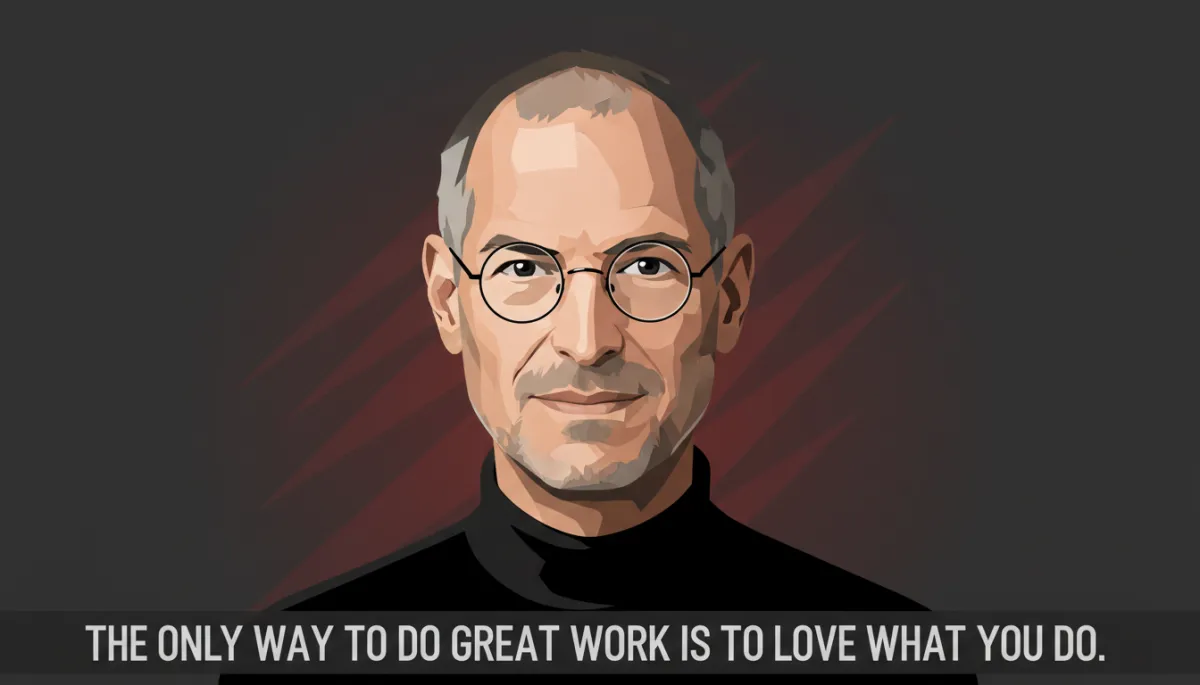
Jobs treated skepticism as a sign he was early, not as a stop sign.
Jason teaches founders to translate objections the way a developer debugs logs. The first error message is rarely the real cause. "There’s no market" often hides three quieter messages:
- "I don’t feel urgent pain yet."
- "I can’t imagine changing my team’s habits for this."
- "I don’t trust that you can pull this off at our scale."
Think of it like a user saying, "The app is slow." As an engineer, you know that’s imprecise. You profile. You measure. You ask, "Slow where? On which screen?" In sales, Jason trains founders to ask, "No market for who? Compared to what? Over what timeframe?"
Forbes has written about how Jobs handled criticism by calmly reframing and demonstrating instead of arguing. (Forbes) Jason leans on the same move inside the Future of Selling System: listen, translate, then show a different picture.
As Jason puts it at AuthorJason.com, when a buyer says "no market," your real work is to localise the problem to their hallway, not to win an argument about the whole industry.
How Steve Jobs Created Markets That Nobody Knew They Needed
Before the iPod, analysts said, "Nobody needs a $499 MP3 player." People already had Discman players and Napster. Before the iPhone, they said, "Nobody will pay $499 for a phone without a keyboard." BlackBerry ruled. Before the iPad, they said, "Nobody needs a tablet." Laptops and phones seemed enough.
Jobs did not answer with TAM charts. He walked on stage, told a simple story, and showed the product in human terms. He made people feel what it would be like to live with this new thing. He understood that buyers cannot articulate demand for what they have never seen. His job was to make the invisible visible.
In 2001, when Steve Jobs unveiled the original iPod, he didn’t lead with storage specs or pricing. He held up a tiny white device and said, "1,000 songs in your pocket." Reviewers initially mocked the price, but within five years Apple had sold over 100 million iPods worldwide, turning a "nobody needs this" luxury into a mainstream music habit.
The 2007 iPhone launch followed the same pattern. Analysts doubted that a touchscreen phone without a physical keyboard could compete with BlackBerry. Jobs didn’t debate them. He showed visual voicemail, pinch-to-zoom, and a real web browser in your hand. Within roughly a year, the iPhone captured a double-digit share of the smartphone market and set Apple on a path to selling billions of devices.
Even the iPad, dismissed as a "big iPod touch" in 2010, became a new category once people saw Jobs casually browsing the web from a couch. Apple sold over 3 million iPads in the first 80 days. Each time, skepticism didn’t vanish because Jobs proved a market; it vanished because people briefly lived in the new future on stage and didn’t want to go back.

Market creation starts with one vivid demo that makes status quo feel outdated.
Jason often compares this to refactoring a legacy codebase. Users will never ask for "a modular architecture with clean interfaces." They just want the app to stop crashing. You do the architecture work anyway, then they experience the reliability and never want to go back. Jobs treated market creation the same way.
As Jason puts it at AuthorJason.com, the play is simple: create one unforgettable moment where the new way feels so natural that "nobody needs this" quietly dies in the buyer’s own mind.
NEW! Future of Selling System — Turn "No Market" Into Your Strongest Signal
Jason built the Future of Selling System (FOS) for founders exactly like you. Graduates have generated over $22M in combined sales since 2015, with more than 1,000 founders applying it in real markets. Jason has hit rock bottom three times and climbed back three times, so he designs every lesson to be kind, practical, and forgiving when you’re tired.
Salesforce reports that 76% of buyers expect sales conversations to be more about guidance than pitching. When you apply FOS, you stop arguing and start guiding. You learn to use the P.I.T.C.H. Formula in every meeting so you can stay calm, even when the objection hits hard.
Get the Future of Selling System for $19/month ($0.63/day)
Billionaire Steve Jobs never proved a market existed — he made buyers feel the future, and the Future of Selling System teaches founders how to do exactly that.
As Jason puts it at AuthorJason.com, a kinder, structured system lets you hear "no market" and think "good, now I know what to show next" instead of "we’re finished."
The P.I.T.C.H. Formula Answer to the No-Market Objection
Inside FOS, Jason teaches the P.I.T.C.H. Formula. It is simple enough to remember under pressure, and structured enough to debug like code:
- P = Prepare: Know the buyer’s world better than your deck.
- I = Intent: State clearly why you’re here beyond "closing."
- T = Teach: Share one sharp insight about their current cost of doing nothing.
- C = Close: Ask for a clear, small next step, not a leap.
- H = Habits: Turn this into a repeatable rhythm for your whole team.
As a developer, you can think of P.I.T.C.H. like a request lifecycle. When the "no market" error appears, you don’t rewrite the whole app. You inspect which stage failed. Maybe you skipped Prepare and walked in with generic examples. Maybe you never Taught them a new way to see their own data.
def handle_no_market_objection(call_context):
    if not call_context.prepared:
        return "Go back and research their world."

    if not call_context.taught_new_insight:
        return "Add one sharp Teach moment with data or story."

    if not call_context.intent_cleared:
        return "Open by stating a helpful, buyer-first intent."

    return "You’re early, not wrong. Keep iterating the story."
This tiny mental script helps founders stay kind to themselves. Instead of, "We’re doomed," the question becomes, "Which part of P.I.T.C.H. did we skip this time?"
When founders actually apply the P.I.T.C.H. Formula to a "nobody needs this" moment, the call feels very different. Jason watched a founder of a workflow-automation startup hear that exact line from a regional COO. Instead of arguing, she calmly restated that her goal was to see whether there was one painful process worth fixing, even if they never bought. Then she walked through a single incident where a shipment delay had already cost the company real money, using the COO’s own numbers from a prior earnings call. Midway through a short screen share, the COO stopped her and asked, "Could your system alert my team before that delay hits our customer?" That became the new center of the conversation. By the end, they agreed on a tiny pilot in one market, not a global rollout. Three months later, that pilot expanded after the COO saw a measurable reduction in manual escalations. The founder didn’t "win the market" in one call; she followed a structure, stayed human, and let one small, specific outcome speak louder than any market slide. If you want to go deeper into how that structure works, Jason breaks it down step by step at what is the Future of Selling System.
Self-Check
- When a buyer says "nobody needs this," do you argue — or find one person who clearly has this problem?
- Can you name a real customer whose life changed because of what you sell?
- Are you selling a category or a specific outcome for a specific person?
As Jason puts it at AuthorJason.com, structure doesn’t make you robotic; it gives you a calmer path through the hardest objection you’ll hear.
The 3-Step Market-Creation Framework for Founders
Step 1 — Stop proving demand. Start demonstrating the future.
Jobs didn’t argue with analysts about whether people needed 1,000 songs in their pocket. He pulled an iPod out of his jeans and showed it. The Mercor trio didn’t convince HR leaders that "AI recruiting from students" was credible. They let the matching results speak first, then explained later.

A simple live demo often answers objections more gently than any argument.
- Open with a concrete "day in the life" moment your buyer already lives — a broken handoff, a late shipment, a failed deployment — so they feel the problem before they see your product.
- Show a short, focused demo of how that exact moment changes with your product in place, using their language, their metrics, and as much of their real data as possible.
- Invite a reaction with one simple question like, "Where would this break in your world?" so the buyer co-creates the future instead of passively judging it.
For you, that might mean opening your call with a two-minute "day in the life" screen share instead of a ten-slide company story. Or it might mean replaying a real event from your logs, then showing how your product would have changed the outcome, line by line.
Step 2 — Find the one person who already feels the pain
Luana Lopes Lara heard, "There’s no legal market for prediction exchanges in the United States." Regulators and investors repeated it. Instead of giving up, she looked for the few people who already felt the pain of bad information about the future — traders, policy wonks, institutions. She pitched in federal court and won the right to build Kalshi as a regulated exchange.
Jason tells founders: stop trying to convince the comfortable middle. Look for the person whose spreadsheets are already breaking. The ops lead who stays late every month-end. The engineer who secretly scripts around the broken workflow. That person is your early adopter, your Mercor-style believer.
- Map the roles in your buyer’s world and ask, "Who loses sleep when this goes wrong?" That’s your first conversation, not the most senior title on the org chart.
- Run small, honest discovery with that person about their ugliest week, not their ideal process, and listen for phrases like "every month" or "I just live with it."
- Co-design a tiny test together that makes their life meaningfully better in a short, clear window — then let their story travel upward.
Step 3 — Let their reaction become your proof of market
When that person finally sees your demo and says, "Wait… can it also do X?" capture it. With permission, turn that moment into a short case, a quote, or even a simple before/after chart. This is how the Mercor trio went from "students with no HR experience" to builders of a $10B company: they let matching quality and customer reactions become their credibility.
class ReactionLog:
    def __init__(self):
        self.entries = []

    def add(self, buyer_role, quote, context):
        self.entries.append({
            "role": buyer_role,
            "quote": quote,
            "context": context
        })

reactions = ReactionLog()
reactions.add(
    buyer_role="Head of Ops",
    quote="If this works, my team gets Fridays back.",
    context="First live demo, Singapore logistics startup"
)
- Record the exact words and context when a buyer lights up — time, role, problem, and what they asked next — while the emotion is still fresh.
- Turn those moments into short, specific stories you can replay in future calls, focusing on the before/after, not your feature list.
- Review your reaction log each quarter to see which patterns of pain and outcomes keep repeating — that’s your real, living proof of market.
Jason asks founders to keep a simple "reaction log" like this. Over a quarter, it becomes your emotional proof of market, even when revenue is still catching up.
As Jason puts it at AuthorJason.com, the fastest way to retire "nobody needs this" is to collect real humans saying, "If this works, I don’t know how we lived without it."
NEW! Learn the Future of Selling System With Jason (Without Burning Out)

A kinder sales system lets your whole team share the load with confidence.
Jason built the Future of Selling System so founders can sell in a way that feels human, technical, and honest. No hype. No pressure tactics. Just clear structure, including how to how to handle sales objections without attacking yourself afterward. Graduates have generated $22M+ in combined sales using these tools.
Salesforce data shows 76% of buyers expect sellers to act as trusted advisors, not pushy closers. When you and your team use the P.I.T.C.H. Formula, you become that advisor — especially when facing the "no market" objection. You stop defending and start guiding, the way you already do when mentoring your own engineers.
Start Future of Selling System — $19/month ($0.63/day)
Billionaire Steve Jobs never proved a market existed — he made buyers feel the future, and the Future of Selling System teaches founders how to do exactly that.
As Jason puts it at AuthorJason.com, once your team can calmly walk through this objection together, "nobody needs this" becomes just another step in your process, not a verdict on your worth.
3 Mistakes That Cost Founders This Deal — and the Bonus One That Hurts the Most
Mistake 1: Arguing That the Market Exists
Marcus, a founder building a niche B2B platform, heard "nobody needs this" from a procurement head. He pulled out a slide deck with market size data — TAM, SAM, SOM. The buyer looked at the numbers and said he'd loop in the team. That was the last meeting. Market data doesn't move buyers. One person with the problem, described precisely, does.
The numbers were technically right, but they were emotionally empty. No one in the room could see themselves inside a pie chart. The objection wasn’t "I doubt your spreadsheet." It was "I don’t see my world changing because of this." Marcus left believing he had "educated" the buyer; in reality, he had given them an easy way to postpone the decision.
On the next deal, Marcus changed his approach. Instead of opening his laptop to the TAM slide, he opened with a single story about a logistics manager who recovered two days a month by fixing the exact process this buyer owned. The conversation stayed grounded in one person’s calendar and stress level, not in abstract billions.
The move: Ditch the market slide. Find one person in the room who has this problem and name their situation exactly.
Mistake 2: Naming Competitors as Proof of Demand
Marcus told his next buyer that three competitors were already in this space — proof the market was real. The buyer's response: "So why do we need you?" The competitor reference didn't validate demand. It raised a differentiation question Marcus wasn't ready for.
He thought he was lowering perceived risk by signalling that the category was "hot." Instead, he accidentally framed himself as an unproven variant of something they could already buy from vendors with longer track records. The meeting drifted into pricing and feature comparisons before the buyer had even decided the problem was worth solving.
Later, Marcus learned to keep competitor talk out of the opening. When he led with one customer story — a finance lead who finally trusted month-end numbers — the buyer leaned in. Only after the problem and outcome were clear did he briefly explain how his approach differed from anything else on the market.
The move: Never use competitor existence as demand proof. Use a customer story instead — one real person, one real outcome.
Mistake 3: Educating Instead of Demonstrating
Marcus spent 40 minutes explaining why the problem was real — industry trends, analyst reports, future projections. The buyer nodded. Then said he wasn't sure the timing was right. Education creates awareness. Demonstration creates urgency. Marcus never showed what solving the problem looked like in practice.
He left the room with a sense of progress because the buyer had agreed with his slides. But agreement is not commitment. Without a live, specific "before and after" moment, the buyer could easily file the idea under "later." Nothing in the meeting forced them to imagine a changed Tuesday afternoon on their own team.
When Marcus eventually flipped the script and opened with a five-minute live walkthrough of a broken workflow, followed immediately by how his product fixed it, the conversation changed. Questions shifted from "Is this real?" to "How fast could we try this in one region?"
The move: Skip the education slide. Show one before-and-after — what the customer's world looked like before and after this problem was solved.
Bonus: Confusing "No Market" with "No Demand in This Buyer's World"
For years, Jason kept trying to prove the market existed — macro data, industry reports, peer examples. Then he realised the buyer wasn't saying the market didn't exist in general. They were saying they personally hadn't felt the problem yet. "Nobody needs this" meant "I don't need this right now." Once Jason stopped defending the market and started making the buyer feel the cost of the problem in their own world, the objection disappeared. The market was never the question. The buyer's pain was.
That shift changed how he prepared. Instead of leading with category-level proof, he dug for evidence inside the buyer’s own numbers: missed deadlines, churned customers, hidden overtime. He learned to say, "Here’s where teams like yours quietly pay for this every quarter," and then ask whether that pattern felt familiar. The calls became less about theory and more about lived experience.
The move: Stop proving the market. Start making the buyer feel the problem — in their business, their team, their numbers.
As Jason puts it at AuthorJason.com, the only market you have to win in any given call is the one that lives inside that buyer’s calendar, dashboard, and team chat.
What to Say When a Buyer Says "Nobody Needs This" — The Exact Founder Script
Buyer: "Honestly, I don’t think anybody needs this. Our team is fine with what we have."
Founder: "Thank you for saying that out loud. Before we close this out, can I ask: in the last quarter, where did things almost break in your world — even if you managed to patch it?"
Buyer: "Month-end reporting is always messy, but that’s just how it is."
Founder: "Got it. If it’s okay, I’ll show you a two-minute before-and-after of another team’s month-end. If you still feel 'nobody needs this' after that, we’ll stop there."
Buyer: "Alright, two minutes is fine."
Founder: "Here’s what their close looked like before — spreadsheets, manual checks, late nights. Here’s what it looks like now, with alerts and reconciliations handled in-line. Where does this feel close to your world, and where is it off?"
Buyer: "If it really cut out those manual checks, my controller would be thrilled."
Founder: "Let’s keep this tiny. How about we run this on just one entity next month and see if your controller feels that difference? If it doesn’t help, we stop. If it does, we can talk about expanding."
As Jason puts it at AuthorJason.com, a simple, honest script like this turns "nobody needs this" into "let’s test whether someone on my team actually does."
Jason, writing from years of helping founders in Singapore and around the world, wants you to know this: your frustration is valid. You are not failing. You are early. With the Future of Selling System, the P.I.T.C.H. Formula, and a handful of brave conversations, you can turn today’s hardest objection into tomorrow’s proudest story — just like Jobs, the Mercor trio, and Luana did in their own worlds.


