How Billionaire Richard Branson Turned Every “Too Risky” Objection Into a $10 Billion Empire — and What Startup Founders Can Learn From It
Sales Objections
How Billionaire Richard Branson Turned Every "Too Risky" Objection Into a $10 Billion Empire — and What Startup Founders Can Learn From It
Billionaire Richard Branson heard "too risky" again and again while building Virgin Atlantic and a $10B+ group. Jason breaks down how Branson answered it — and the exact playbook founders can use to handle the too risky sales objection without begging, discounting, or burning out.

Jason has watched the same scene play out with founders again and again.
The buyer is nodding. The problem is clear. The offer makes sense. Then the words drop like a hammer: "This feels a bit too risky right now."
The founder feels their chest tighten. They start talking faster. They discount. They throw in extras. And the deal still dies.
Why "Too Risky" Is the Objection Founders Dread Most — and Handle Worst
How do you handle "too risky" sales objections without begging or discounting?
Treat "too risky" as a story problem, not a price problem. Show buyers three things: what it costs them to stay the same, how you remove or cap the downside, and how others like them crossed the bridge safely. Then give them a smaller, safer first step instead of a giant leap.
Why do smart buyers say "too risky" even when the ROI is obvious?
Because risk is emotional, not logical. They are picturing what happens if they are wrong and get blamed. Your job is to change the movie in their head: from "I might get fired" to "I will look smart for making this move now."
What is the first step to reduce risk objections in a startup sales process?
Map the real risks your buyers fear: money, time, reputation, and team disruption. Then design your offer so each fear has a visible safety net — guarantees, pilot phases, clear milestones, and proof from similar companies.
How can founders prepare for "too risky" before the call even starts?
Research the buyer’s past projects, approval process, and political risks, then walk in ready with one story, one structure, and one small first step tailored to their world.
What should a founder avoid saying right after hearing "too risky"?
Avoid “Actually, it’s not risky at all.” That dismisses their fear. Acknowledge it, ask what they’re picturing going wrong, and only then start reshaping the risk together.
"Too risky" sounds like a logical objection. It is not. It is fear wearing a suit and tie. Fear of looking stupid. Fear of wasting budget. Fear of making a bet that does not pay off.
Jason sees this most with founders who still lead every sale while running a team of five, ten, fifteen people. They are not failing. They are just tired of hearing the same fear from prospects who should have said yes months ago.
Big companies know this. McKinsey and HBR have written for years about how companies that invest during uncertainty often beat the ones who freeze. But buyers are still human. They still feel the fear in their stomach before they see the upside on a slide.
Salesforce has also shown how uncertainty tightens buying committees and slows decisions, especially on new vendors. Their research on modern B2B buying behavior underlines just how much risk perception shapes whether a deal moves or stalls.
As Jason puts it at AuthorJason.com, your job is to make the status quo feel like the real gamble and your pilot feel like the sensible insurance policy.

Jason built the Future of Selling System to give founders and their teams a way to handle this fear without turning every call into a wrestling match. Not theory. Simple moves your whole team can run on repeat.
What Buyers Really Mean When They Say "Too Risky"
What do most founders do wrong when they hear "that's too risky"?
They argue. They defend. Or they fold. Instead of exploring the fear, they throw logic and discounts at an emotional fire. The buyer shuts down, and the deal quietly dies a week later in an email.
How should founders respond in the first 10 seconds after a risk objection?
Slow down. Thank them for being honest. Then ask, "When you say risky, what are you most worried could go wrong?" This shifts the conversation from a vague feeling to a specific problem you can solve together.
Why is discounting a bad way to handle "too risky"?
Because price is not the real issue. If they think the move might blow up their budget, their reputation, or their team, making it cheaper does not fix the fear. It just tells them you are not confident in your own value.
How can founders tell if "too risky" is a real objection or a polite no?
Ask, “If we could solve the risk piece, would anything else stop us moving forward?” A real objection opens into specifics; a polite no stays vague or shifts to new excuses.
How do you keep a buying committee aligned once one stakeholder says "too risky"?
Loop everyone back to shared goals, then ask each stakeholder what “safe enough” would look like. Co-designing the safety net keeps one fearful voice from quietly vetoing progress.
The most common mistake Jason sees? Founders treat "that's too risky" like a verdict instead of an invitation. They assume the decision is final. They forget that this is often the first honest moment in the whole conversation.
"Risk objections are not walls. They are doors that need a different key."
— Jason, AuthorJason.com
Salesforce reported that 76% of reps missed quota in recent years. Jason believes a big part of that is simple: no one ever taught them how to talk about risk like an adult, not a desperate seller.
Jason teaches founders to treat risk objections like a doctor treats pain. You do not shout over it. You do not pretend it is not there. You ask where it hurts, how long it has hurt, and what they have tried before. Then you show a better plan.
As Jason puts it at AuthorJason.com, the founder who calmly diagnoses the fear earns more trust than the one who keeps pitching features.
How Richard Branson De-Risked Every Objection Without Lowering His Price
What did Richard Branson do when everyone said Virgin Atlantic was too risky?
He changed the deal, not the dream. Branson negotiated a one-year return clause on the first Boeing 747. If the airline failed, he could return the plane. That move turned a "crazy risk" into a calculated test with a safety net.
When Richard Branson first explored launching Virgin Atlantic’s transatlantic route in the early 1980s, bankers and aviation insiders told him he was out of his depth. The airline industry had recently gone through oil shocks and deregulation; established carriers like British Airways and Pan Am were already fighting for market share on the London–New York corridor. To them, a record-label founder leasing a wide-body 747 looked like a reckless leap.
Branson’s key move was to insist on a lease structure with Boeing that allowed him to return the aircraft after about a year if the route failed to gain traction. That clause meant Virgin’s downside was largely limited to the first year’s experiment instead of a decade-long financial anchor. Within that first year, Virgin Atlantic was flying with strong load factors, and the airline went on to generate hundreds of millions of pounds in annual revenue as it expanded routes and aircraft.
Branson repeated this pattern in other ventures. With Virgin Mobile in the UK, he used a mobile virtual network operator (MVNO) model, piggybacking on existing infrastructure instead of building towers from scratch. That structure dramatically reduced capital risk while still allowing Virgin to capture millions of subscribers before selling the business in deals valued in the billions. Again, he didn’t remove risk; he boxed it in so partners and investors could breathe.
How is Branson's Boeing deal relevant to startup founders handling risk objections?
It shows that structure beats bravado. Instead of pushing harder, he made the downside smaller and clearer. Founders can do the same with pilots, milestones, and clear exit ramps instead of vague "trust us" promises.
What can founders learn from Branson about selling a risky vision?
Sell the upside like a movie trailer, but engineer the downside like a safety inspector. Branson did both. He painted the dream of a better airline and built contracts that protected partners if it did not work.
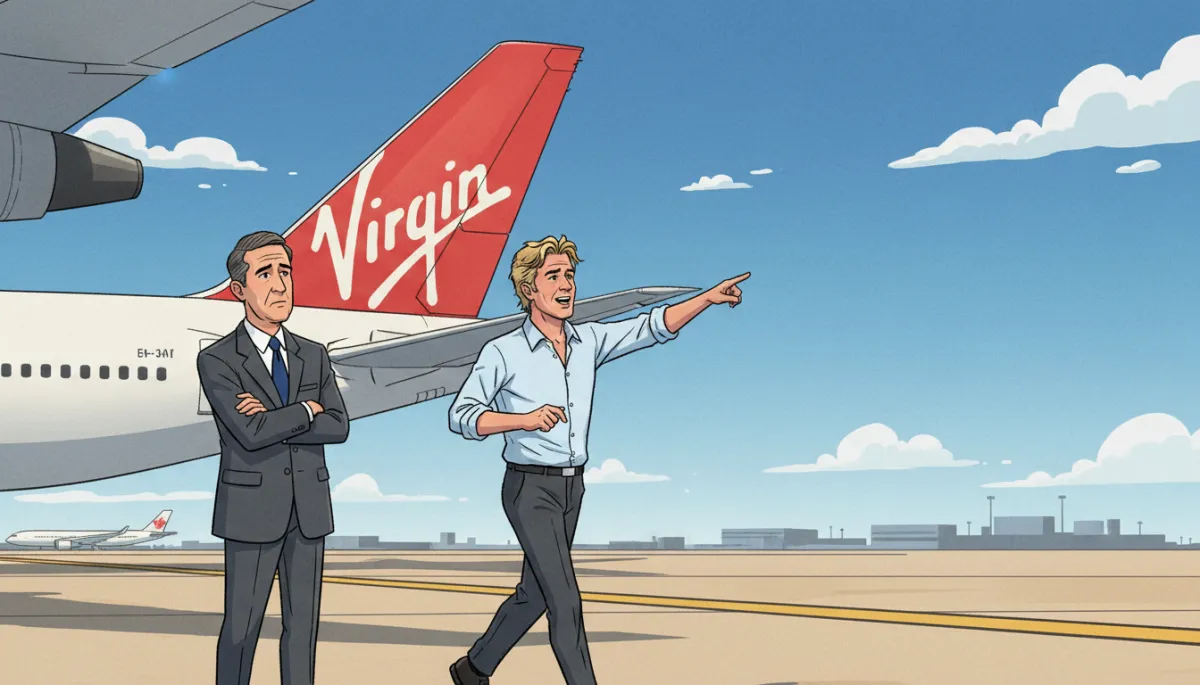
When Branson wanted to launch Virgin Atlantic, almost every expert told him it was madness. Airlines were capital-heavy. Margins were thin. British Airways was dominant. Boeing itself thought he was pushing his luck by trying to lease a 747 as a music guy with no airline track record.
Branson's genius move was simple: he attacked the risk in the contract, not in the pitch. He negotiated that one-year return clause on the first 747. If the route failed, he could walk away without being crushed by debt. The "too risky" stories from bankers and suppliers suddenly had less weight.
Jason uses this story with founders in Singapore and beyond to show a simple truth: you do not beat risk objections with more hype. You beat them by designing a better deal. That is the same spirit behind his P.I.T.C.H. Formula inside the Future of Selling System.
As Jason puts it at AuthorJason.com, you win more often when you engineer a softer landing than when you shout louder about the upside.
The P.I.T.C.H. Formula Answer to the Risk Objection
What is the P.I.T.C.H. Formula for handling risk objections?
It is Jason's simple pattern: P = Prepare, I = Intent, T = Teach, C = Close, H = Habits. It helps founders turn "too risky" into "I would be crazy not to start small with you."
Jason built the P.I.T.C.H. Formula inside the Future of Selling System as a way to make objection handling teachable. Not random genius. Not founder-only magic. A repeatable pattern your team in Singapore, London, or anywhere can run on Monday morning.
In practice, Jason has watched founders use the P.I.T.C.H. Formula to completely change the energy in the room when a buyer says, "This feels too risky." One SaaS founder he coached was pitching a regional bank that had been burned by a failed software rollout two years earlier. Halfway through the meeting, the CIO crossed his arms and said, "We just can’t afford another disaster like the last one." Instead of pushing harder, the founder slowed down, restated his calm purpose for the conversation, and walked the room through what would happen if they did nothing for another year — lost customers, compliance exposure, and mounting manual work.
Then he suggested a tightly scoped pilot in one branch with a clear checkpoint, framed in the same language Jason teaches inside the Future of Selling System. Faces in the room literally relaxed — the CFO uncrossed his arms, and the operations lead started asking implementation questions instead of objections. Two weeks later, the bank signed a limited pilot worth low five figures, which expanded over twelve months into a six-figure annual contract once the early numbers came in. The objection didn’t vanish; it was redirected into a structured, winnable test.
As Jason puts it at AuthorJason.com, when founders follow one clear pattern for risk, buyers stop feeling sold and start feeling guided.
How does P.I.T.C.H. reduce fear for corporate buyers?
It gives them a roadmap. You prepare the risk story, set a calm intent, teach the numbers, close on a safe first step, and build habits so every rep handles fear the same way. Consistency builds trust faster than charm.
Can a founder's team use P.I.T.C.H., or is it just for the CEO?
It is built for teams. Jason designed it so sales, CS, and even product folks can learn the same moves. That way, risk objections get handled the same way across the whole company, not just when the founder jumps in.
Self-Check
- When a buyer says "it's too risky," do you defend your product — or ask what specifically feels risky to them?
- Have you built a risk reversal into your offer (trial, guarantee, phased start)?
- Can you name one founder who faced this same risk and succeeded — with numbers?
How can founders use P.I.T.C.H. on short discovery calls?
Even in 20 minutes, you can set a calm purpose, surface real risks, share one proof story, and suggest a tiny next step instead of pushing for a full rollout.
What if my team feels awkward using a formula on live calls?
Practice on low-stakes calls first. Over time, the pattern becomes muscle memory, and buyers just experience you as calm, structured, and genuinely curious about their risk.
- P = Prepare: Map the buyer's real risks before the call. Money. Time. Reputation. Team impact. Come in with stories and structures ready.
- I = Intent: State your intent early. "My goal today is to see if there is a low-risk way to test this together, not push you into a big bet."
- T = Teach: Teach the math of inaction. Show what it costs them to stay the same for six, twelve, twenty-four months. Use simple numbers, not a 40-page deck.
- C = Close: Close on a safe first step. A pilot. A limited scope. A clear checkpoint. Like Branson's one-year clause, but for your world.
- H = Habits: Turn these moves into habits with your team. Role-play. Debrief calls. Build objection libraries. Make it muscle memory, not luck.
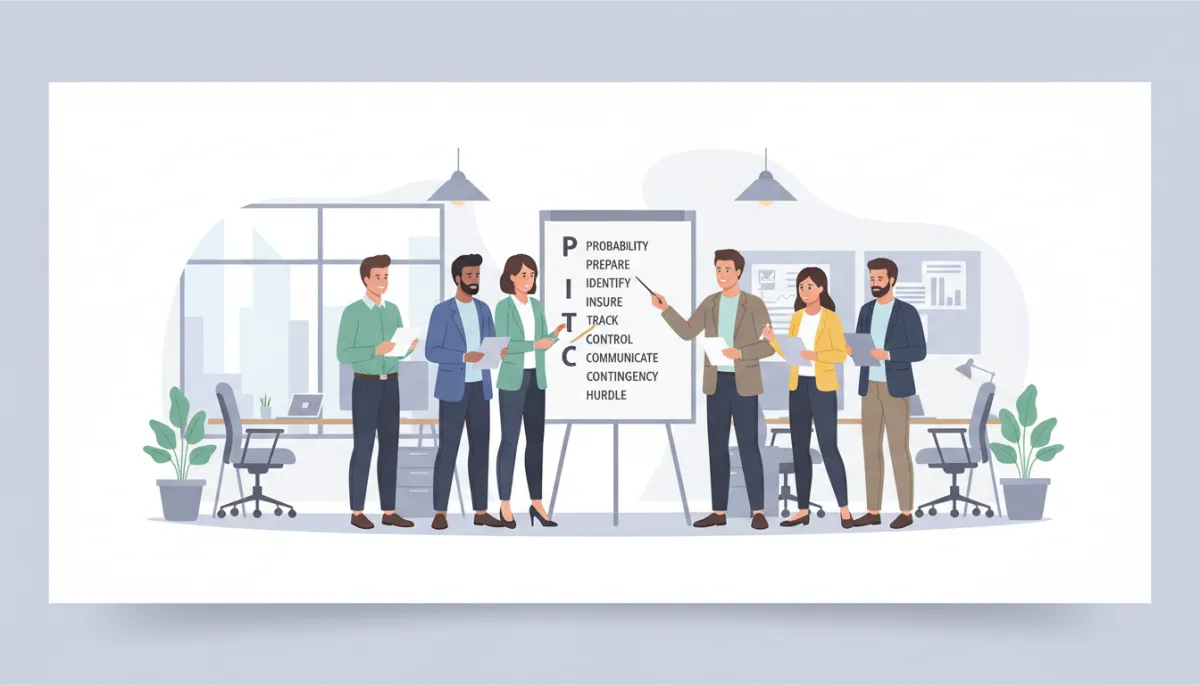
If you want a deeper dive, Jason breaks this down step by step in his post on how to handle sales objections for founders who still lead from the front.
The 3-Step De-Risk Framework for Founders
Step 1 — Name the Risk Before They Do
How do you make inaction feel riskier than your solution?
Show the cost of delay in simple numbers and real stories. Walk them through what six or twelve more months of the current problem will cost in revenue, churn, or team burnout. Then show how a small pilot changes that slope.
This is where Jason points to James Cameron. Studios called Titanic "too risky and too expensive" — a $200M budget when no film had crossed $100M. Cameron agreed to back-end deals instead of upfront pay. He shared risk and upside. The "too risky" project became the highest-grossing film in history at the time. Both Cameron and Federer are featured among the new billionaires of 2026 who turned their biggest objections into their biggest wins.
When James Cameron pitched what would become “Titanic,” executives at 20th Century Fox balked at the ballooning budget and historical-epic genre. The project ultimately cost around $200 million, making it the most expensive film ever produced at the time. To keep the film alive, Cameron agreed to forgo his usual director’s salary and instead take a share of the profits, effectively betting his own income on the movie’s success.
That shift reframed the studio’s risk: they were no longer paying full freight for a potentially bloated project; they were partnering with a director who had real skin in the game. “Titanic” went on to gross more than $2.2 billion worldwide and held the all-time box office record for over a decade. Cameron later used a similar pattern on “Avatar,” again accepting significant back-end participation. The perceived “too risky” bets became multi-billion-dollar franchises.
As Jason puts it at AuthorJason.com, when you share the downside in a visible way, nervous decision-makers suddenly see you as a partner, not a cost line.
- Quantify the hidden cost of doing nothing over the next 6–24 months.
- Tell one concrete story of someone who waited too long — and paid for it.
- Lay out the small, time-boxed experiment that changes their trajectory.
- Path A: stay the same, lose X per month, keep firefighting.
- Path B: run a pilot, risk is capped at Y, upside is Z.
Step 2 — Reframe Risk as an Evidence Gap, Not Danger
How can founders copy Branson's risk-reducing deal structure?
Build clear escape hatches. Offer time-bound pilots, milestone-based fees, or staged rollouts. The goal is not to remove all risk but to cap it and make it visible, like Branson's one-year 747 return clause with Boeing.
Think like Branson did with Virgin Atlantic. He did not say, "Trust me, it will work." He said, "If it does not, here is exactly how you will not get hurt." For your startup, that could be:
- Define one or two clear “stop if” conditions that cap their downside.
- Tie fees or scope to milestones so they only scale once value appears.
- Document the exit path in writing so the buyer can defend it internally.
- A 90-day pilot with a fixed fee and clear success metrics.
- A partial rollout to one region or team before going company-wide.
- A "stop if" clause — if you do not hit X by Y date, they can pause or exit.
As Jason puts it at AuthorJason.com, once the escape hatch is clear, the “too risky” story loses most of its power in the buyer’s head.
Step 3 — Offer a Contained First Step (the Branson Lease Move)
How did Sara Blakely crush "too risky" with a department store buyer?
When Neiman Marcus buyers called Spanx-style pantyhose too risky to stock, she took the buyer to the bathroom, changed clothes, and demonstrated the product on herself. The risk was "unproven." Her live demo turned it into obvious proof.
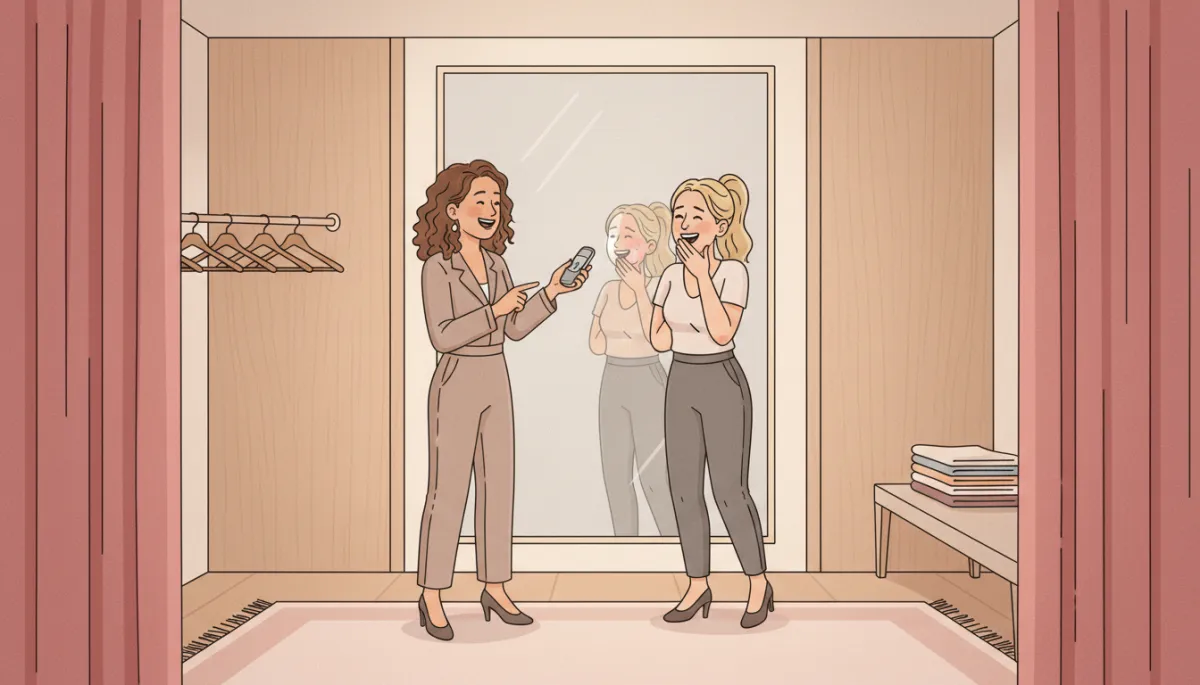
Sara Blakely’s early Spanx journey is full of “too risky” moments. Before Neiman Marcus agreed to stock her product, hosiery buyers were skeptical that women would pay premium prices for footless pantyhose from an unknown brand. The pivotal meeting came when a Neiman Marcus buyer questioned whether the product really made a visible difference. Blakely suggested they go to the restroom, changed into white pants, and showed the before-and-after effect on her own body.
That live demo reframed the risk from “Will women actually notice or care?” to “We might miss a category-defining product if we pass.” Neiman Marcus placed an initial order, and other department stores followed. Spanx eventually grew into a business valued at over $1 billion, with Blakely retaining full ownership before later selling a majority stake. A single, gutsy proof moment turned a skeptical objection into a nationwide rollout.
- Design one small test that proves your promise in their world.
- Make that step so contained they’d feel silly saying no.
- Use that test to create a story you can reuse with the next buyer.
Jason loves this story because it is so human. No jargon. No funnel. Just, "Come see this with your own eyes." For your startup, that might mean:
- Running a live walkthrough on their own data, not dummy data.
- Letting them talk to an existing customer with a similar use case.
- Doing a "day in the life" simulation of their team using your product.
As Jason puts it at AuthorJason.com, proof beats persuasion — especially when fear is running the meeting.
Make the Status Quo Look Riskier Than You
How do you flip the frame so your offer feels safer than doing nothing?
Use contrast. Lay out the hidden risks of staying the same: lost deals, churn, burnout, competitive gaps. Then show how your structured, low-risk approach reduces those risks step by step. You are not the risky option; you are the seatbelt.
Elon Musk did this with rockets. Branson did it with airlines. Sara Blakely did it with undergarments. Jason helps founders do it with software, services, and platforms. Different industries. Same move: show that drifting is more dangerous than deciding.
- Spell out the compounding pain of delay in numbers, not adjectives.
- Frame your offer as a reversible experiment, not a permanent marriage.
- End with a choice: stay exposed, or run a capped-risk test together.
As Jason puts it at AuthorJason.com, once the status quo looks like the scary option, “too risky” often turns into “too important to ignore.”


