FUTURE OF SELLING · JASON LIM
Negotiation Training in Beijing for Founders and Commercial Teams
What if your team arrived at a procurement round with a plan for every request, instead of hoping the sponsor's support would protect the price? Imagine knowing which terms you can move, what each concession must earn, and how to keep the value agreed with the business side. It's like arriving at a formal meeting with an agreed brief and fallback positions. Even if procurement in large organisations always asks for more, your terms can still hold.
APPLY FOR NEGOTIATION TRAINING (ONLINE)We reply personally on WhatsApp within one business day.
Our graduates have produced 8-figure results and beyond.
Since 2016, his events have reached 100,000+ founders across Asia.
Closed $7M+ in deals by 24 and rebuilt from zero twice.
Why learn from Jason Lim?
He has sat where you sit.
He closed over $7 million in deals, so a Beijing procurement negotiation plan is built to keep value through to the signature.
He has coached since he was sixteen.
He started coaching basketball at 16, and contract negotiations are rehearsed like plays, with each role knowing its move.
Results his graduates can show.
8-figure results have been produced by graduates applying this method; two of their stories appear further down, and procurement rounds are prepared with it.
Trained by renowned mentors.
He studied under Marshall Thurber (creator of Money & You®), Joel Bauer, Tony Robbins, Chet Holmes and Bob Proctor. In a Chaoyang procurement round the rule is to trade, never simply to give.
Why is Future of Selling the best negotiation training in Beijing?
A proven framework.
The value agreed with the business sponsor is carried into the procurement round, so price is not discussed in isolation.
An easy, step-by-step system.
Contract terms such as payment schedules and penalties are planned up front, not discovered at the end.
Fast results.
P.I.T.C.H. helps the team ask for something in return at every level of approval.
The negotiation training in Singapore method, applied for Beijing rooms.
How negotiation training with Future of Selling works
- 1
Learn the rules of selling.
We map an upcoming negotiation: who negotiates at each level, what procurement is likely to ask, and which terms matter most to you.
- 2
Learn P.I.T.C.H., Jason's signature method.
Power, Intent, Teach, Close and Habits plan the sequence: linking value agreed with the sponsor to the procurement round, preparing trades and setting the walk-away point.
- 3
Learn the art and science of closing and countering objections.
The team rehearses procurement and committee scenarios with us until the plan holds at every level.
If deals reach procurement without the value being clear, start with presentation coaching in Beijing. For the enterprise team's overall method, see sales training in Beijing.
Top reviews for Future of Selling by enterprise teams who negotiate with procurement departments, tender committees and state-linked buyers in Beijing: Success Stories and Transformations
“that's the pitch master”
“But, my instinct was, I’ve done this for so many years. I’ve pitched in front of funds. I’ve helped startups pitch to funds. My ego lah, right? Couldn’t see the value. So I said to myself, let’s humble ourselves. Let’s learn something.”
“Then, when it came to my turn—in that one minute pitch in the chambers—it went out.”
Stanley Tan, Fund Manager, Skystone Asset Management. Programmes attended: Speed of Yes, 1Pitch™ Persuasion System, Diamond Consult.
“Before I met Jason, I was slogging day in and day out, working 15+ hours, “chasing” money, afraid to sleep.”
“my company increased sales by $253,000 in just 6 months.”
Styles Chong, Managing Director, Okeanos Trading. Programmes attended: Facebook Ads Mastery, Perfect Client System, Trustable Brand.
Plan the next Beijing procurement negotiation before the price round opens
Apply for Future of Selling negotiation training in BeijingWho is Jason Lim?
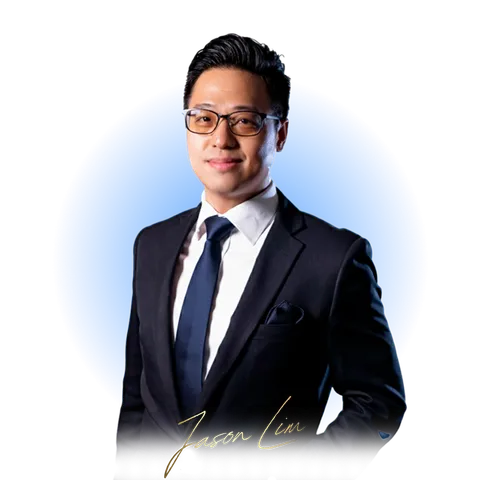
"I built this because I failed," Jason Lim has said. "I let my family down." He made a vow: "if I could rise again, I'd teach others how to win without losing everything that matters." A financial scam had already taken his family's savings. In 2020, he lost what he himself had built.
Future of Selling exists to keep that promise, and P.I.T.C.H. is the method inside it. He is the founder of DreaMaker Ventures as well. Basketball coaching at 16 came first, and he later closed over $7 million in deals. Renowned mentors guided him: Marshall Thurber (creator of Money & You®), Joel Bauer, Tony Robbins, Chet Holmes and Bob Proctor. Among his clients are founders and leaders from Skystone Asset Management, Signarama Singapore, Enlightenment Education, Mindreader AI and 8Yolk Design Studio.
Are you facing this right now?
Procurement undoes what the sponsor agreed.
The business side in Chaoyang accepts the proposal, and the procurement round cuts the price without changing the scope.
Penalties and payment terms arrive late.
Contract clauses on delivery, penalties and payment schedules appear at the end, and the team accepts them to avoid delay.
Every level asks for something.
Each approval step requests a small concession, and nobody tracks what has already been given.
Time buyers spend with suppliers
17%
When B2B buyers are considering a purchase, they spend only 17% of that time meeting with potential suppliers. When they compare several suppliers, the time with any one sales rep may be only 5% to 6%.
What happens if this continues?
Procurement departments in large Beijing organisations usually benchmark suppliers before negotiating.
Most buyers prefer to research on their own first. A team that meets that benchmark with a discount alone will be asked for another at the next level.
Price reductions conceded to procurement after the business sponsor already agreed.
The sponsor agrees the value, then procurement asks for a reduction, and the team gives it to keep the deal moving.
Contract terms reopened at each approval level.
Each approval level reopens a term, and the contract that gets signed is worse than the one first agreed.
Directors are called in to rescue final rounds.
Senior people spend evenings on calls about payment schedules and penalties because the team had no plan for them.
Then a framework agreement locks in poor terms for years.
A multi-year contract signed under pressure carries the same concessions into every renewal and every new project.
Why do Price reductions conceded to procurement after the business sponsor already agreed and contract terms reopened at each approval level keep repeating and never go away?
Enterprise negotiations in Beijing often split into two conversations: value with the business sponsor and price with procurement. Teams that win the first and arrive unprepared for the second concede terms one at a time, because procurement's job is to ask and nobody planned the trades. It's like passing the technical review and then failing the paperwork.
How Future of Selling can help
Negotiate with procurement that has benchmarked you.
Most buyers prefer to research on their own first. A Beijing team has to answer that benchmark with agreed value, not only a lower price.
Use limited negotiating time wisely.
Buyers spend only 17% of their buying time with suppliers. Procurement rounds are a small slice of that, so every exchange should be planned.
Negotiate with organisations that chose Beijing.
New foreign-invested enterprises established in Beijing in 2025, 19.5% more than in 2024. Many are setting supplier terms for the first time, which makes the first negotiation especially important.
Agree terms with organisations still being formed.
New foreign-invested enterprises established in China in 2025, 19.1% more than in 2024. New organisations set procurement habits early, and a well-planned first contract helps.
New foreign-invested enterprises in China
70,392
New foreign-invested enterprises established in China in 2025, 19.1% more than in 2024.
Source: Ministry of Commerce of the People's Republic of China (MOFCOM) News Office, 23 January 2026
New foreign-invested enterprises in Beijing
2,405
New foreign-invested enterprises established in Beijing in 2025, 19.5% more than in 2024.
Buyers who'd rather skip the rep
61%
Of B2B buyers prefer an overall rep-free buying experience, yet for tasks such as judging whether a product or service fits their company's needs, buyers prefer to seek seller input.
Source: Gartner press release, 25 June 2025: survey of 632 B2B buyers, August to September 2024
Train the contract team's trades while the framework terms are still in draft
Apply for Future of Selling negotiation training in BeijingWhere are we located?
- WeWork North Taikoo Li, 11 Sanlitun Road, TWR N3 3/F, Chaoyang, Beijing, China
- WeWork Air China Century Building, 40 Xiaoyun Road, Chaoyang, Beijing
Map data © OpenStreetMap contributors. View a larger map
Contact Us
Tell us about the procurement or contract negotiation coming up, who sits on the other side, and the terms you must protect. Apply on the Future of Selling page, and we will reply personally on WhatsApp within one business day.