FUTURE OF SELLING · JASON LIM
Sales Process Coaching in Beijing for Sales Leaders and Founders
What if your enterprise pipeline showed which approval each large deal had actually cleared? Imagine knowing whether a deal is waiting on the sponsor, the evaluating department, the tender or the final signature. It's like an approval routing sheet attached to every file. Even if large Beijing deals have always seemed unpredictable, the stages can still be made visible.
APPLY FOR PROCESS COACHING (ONLINE)We reply personally on WhatsApp within one business day.
Our graduates have produced 8-figure results and beyond.
Since 2016, his events have reached 100,000+ founders across Asia.
Closed $7M+ in deals by 24 and rebuilt from zero twice.
Why learn from Jason Lim?
A seller before a coach.
He closed over $7 million in deals, so the Beijing enterprise stages he helps you design track approvals gained, not meetings held.
He started coaching young.
He started coaching basketball at 16, and a good game plan names who must make each play, and enterprise stages should too.
Proof from people who used it.
The method's graduates have produced 8-figure results; read two of their stories below, then see the same method set the stages of an enterprise pipeline.
Trained by renowned mentors.
He studied under Marshall Thurber (creator of Money & You®), Joel Bauer, Tony Robbins, Chet Holmes and Bob Proctor. A Haidian enterprise pipeline needs a system that makes progress visible.
Why is Future of Selling the best sales process coaching in Beijing?
A proven framework.
Stages track approvals at each level of the client, so a large deal's real position is visible in every review.
An easy, step-by-step system.
Procurement and tender steps are designed into the process, so the team prepares for them before they arrive.
Fast results.
P.I.T.C.H. defines the ask at each approval level, so meetings move the deal instead of maintaining it.
The sales process coaching in Singapore method, applied for Beijing rooms.
How sales process coaching with Future of Selling works
- 1
Learn the rules of selling.
We map recent large deals, won and lost, through each client's approval chain: sponsor, evaluators, procurement and signatory.
- 2
Learn P.I.T.C.H., Jason's signature method.
Power, Intent, Teach, Close and Habits shape stages defined by approvals actually gained, with the tender and procurement steps built in rather than bolted on.
- 3
Learn the art and science of closing and countering objections.
Your team runs the new stages on live enterprise deals with us, and we refine them until the forecast reflects where approvals truly stand.
If approvals stall because senior meetings go poorly, see presentation coaching in Beijing. For a wider commercial diagnosis, see B2B sales consulting in Beijing.
Top reviews for Future of Selling by enterprise leaders whose sales stages ignore procurement, tender and layered approval in Beijing: Success Stories and Transformations
“my company increased sales by $253,000 in just 6 months.”
Styles Chong, Managing Director, Okeanos Trading.
“I was barely making $2,000 a month, with poor enrollment. At that point, I was honestly desperate.”
“I managed to recover that $15,000 loss quickly—and beyond that, from January to June alone, we’ve already crossed $100,000 in revenue.”
Jeffrey Teo, CEO, Ace Your Econs. Programmes attended: Facebook Ads Mastery, Perfect Client System.
Redesign the Beijing enterprise stages before the next budget cycle begins
Apply for Future of Selling sales process coaching in BeijingWho is Jason Lim?
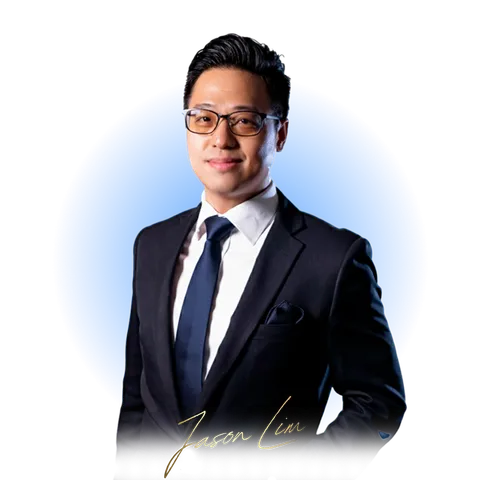
"I built this because I failed," Jason Lim has said. "I let my family down." He made a vow: "if I could rise again, I'd teach others how to win without losing everything that matters." A financial scam had already taken his family's savings. In 2020, he lost what he himself had built.
Future of Selling exists to keep that promise, and P.I.T.C.H. is the method inside it. He is the founder of DreaMaker Ventures as well. Basketball coaching at 16 came first, and he later closed over $7 million in deals. Renowned mentors guided him: Marshall Thurber (creator of Money & You®), Joel Bauer, Tony Robbins, Chet Holmes and Bob Proctor. Among his clients are founders and leaders from Skystone Asset Management, Signarama Singapore, Enlightenment Education, Mindreader AI and 8Yolk Design Studio.
Are you facing this right now?
'Proposal sent' is where deals go to wait.
Half the pipeline sits at the same stage in Chaoyang, and nobody can say who inside the client is holding it.
Tenders are not part of the process.
The team learns about formal procurement late, and responds without having shaped the requirements.
Forecasts depend on optimism.
Account managers estimate probabilities from the mood of the last meeting, because the stages carry no evidence of approval.
Time buyers spend with suppliers
17%
When B2B buyers are considering a purchase, they spend only 17% of that time meeting with potential suppliers. When they compare several suppliers, the time with any one sales rep may be only 5% to 6%.
What happens if this continues?
Large organisations do much of their supplier evaluation internally before formal contact.
Most buyers prefer to research on their own first. In a Beijing enterprise sale, a process that starts at the first meeting misses the internal work already done.
A pipeline that shows meetings held, not approvals gained.
Deals sit at 'proposal sent' for months, and nobody knows whether they are being evaluated or forgotten.
Tender and procurement steps treated as paperwork rather than stages.
Tenders arrive as surprises, because the stages never tracked the procurement plan that preceded them.
Weekly reviews repeat the same questions.
Every pipeline meeting asks for status on the same large accounts, and the answers depend on who last talked to the client.
Then the budget cycle closes and the forecast collapses.
Deals counted for this year are pushed to the next, and leadership finds out at the end rather than in time to act.
Why do A pipeline that shows meetings held, not approvals gained and tender and procurement steps treated as paperwork rather than stages keep repeating and never go away?
Enterprise sales processes used in Beijing often copy a generic sequence: lead, meeting, proposal, negotiation, close. Large buyers decide through sponsors, evaluators, procurement and signing levels, and a pipeline that does not track those approvals cannot tell a live deal from a stalled one. It's like tracking a document's location in the building without checking which signatures it carries.
How Future of Selling can help
Begin where large buyers begin deciding.
Most buyers prefer to research on their own first. A Beijing enterprise process must reach that internal evaluation, not start at the first formal meeting.
Use scarce senior access to gain approvals.
Buyers spend only 17% of their buying time with suppliers. Each meeting in a long enterprise cycle should move one approval forward.
Design a process for organisations that chose Beijing.
New foreign-invested enterprises established in Beijing in 2025, 19.5% more than in 2024. Many of them are still forming procurement habits, which a clear process can map early.
Prepare for organisations still being formed.
New foreign-invested enterprises established in China in 2025, 19.1% more than in 2024. New organisations bring new approval chains, and the process should uncover them early.
New foreign-invested enterprises in China
70,392
New foreign-invested enterprises established in China in 2025, 19.1% more than in 2024.
Source: Ministry of Commerce of the People's Republic of China (MOFCOM) News Office, 23 January 2026
New foreign-invested enterprises in Beijing
2,405
New foreign-invested enterprises established in Beijing in 2025, 19.5% more than in 2024.
Buyers who'd rather skip the rep
61%
Of B2B buyers prefer an overall rep-free buying experience, yet for tasks such as judging whether a product or service fits their company's needs, buyers prefer to seek seller input.
Source: Gartner press release, 25 June 2025: survey of 632 B2B buyers, August to September 2024
Map the approval path for large deals while next year's targets are still open
Apply for Future of Selling sales process coaching in BeijingWhere are we located?
- WeWork North Taikoo Li, 11 Sanlitun Road, TWR N3 3/F, Chaoyang, Beijing, China
- WeWork Wangjing International Business Center, 9 Wangjing Jie, Chaoyang District, Beijing, China
Map data © OpenStreetMap contributors. View a larger map
Contact Us
Tell us about how large deals move from first meeting to signed contract today, where they stall, and the Beijing budget cycle that matters. Apply on the Future of Selling page, and we will reply personally on WhatsApp within one business day.
Apply for Future of Selling sales process coaching in Beijing